The Best Tours & Things to Do in Birmingham, Alabama
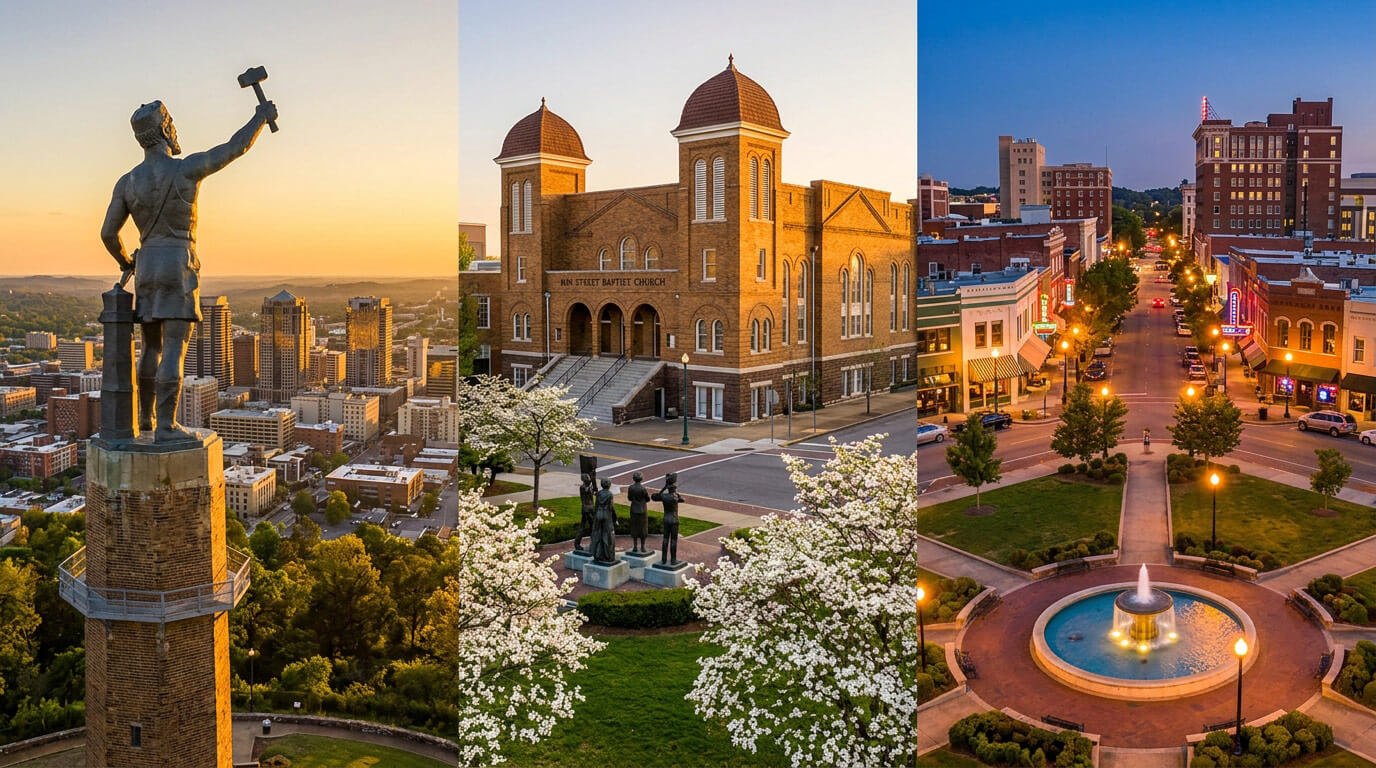
Birmingham splits its identity between two eras: the Magic City's rise as an iron and steel manufacturing hub in the late 19th century, preserved today at Sloss Furnaces and atop Red Mountain at Vulcan Park, and the city's central, often violent role in the civil rights movement of the 1960s, still felt most directly in the Civil Rights District downtown. A revitalized food scene and Railroad Park have given the city a newer draw well beyond its historical significance.
Birmingham's mix of industrial and civil rights history is only part of the picture in Alabama. The full Alabama Tours & Tickets guide covers the rest of the state, from Gulf Coast beaches to Huntsville's Rocket City.
Top Attractions, Tours and Tickets in Birmingham
The Civil Rights District
Birmingham's Civil Rights District, centered on 16th Street Baptist Church and Kelly Ingram Park, was the epicenter of some of the movement's most consequential and violent confrontations. The church, bombed by Ku Klux Klan members in September 1963 in an attack that killed four young girls, remains an active congregation and still receives more than 200,000 visitors a year. Kelly Ingram Park, just across the street, was where Birmingham police and fire officials turned dogs and fire hoses on child demonstrators in May 1963, images that shocked the country and helped push the Civil Rights Act of 1964 toward passage; the park's sculptures now memorialize those confrontations directly. The Birmingham Civil Rights Institute, adjacent to the park, covers the movement's history in far more depth through exhibits and oral histories. Birmingham's role in the movement connects directly to Montgomery Tours & Tickets, roughly 90 miles south, where the Civil Rights Memorial Center and Rosa Parks Museum continue the same story.
Sloss Furnaces
Sloss Furnaces operated as a working pig iron blast furnace from 1882 until 1971, and its preserved machinery, catwalks, and blast furnace towers now make up one of the only National Historic Landmarks in the country dedicated to industrial ironmaking rather than a battlefield or building. The furnaces employed thousands of Black workers and European immigrants under conditions that were often dangerous and, into the 20th century, explicitly segregated, a history the site's self-guided and docent-led tours address directly rather than glossing over. After dark, Sloss also leans into its reputation as one of the most reportedly haunted sites in the South, with tickets for seasonal ghost tours built around the furnace's more gruesome workplace-accident history selling out especially fast around Halloween.
Vulcan Park & Museum
Vulcan, the Roman god of the forge, has looked out over Birmingham from atop Red Mountain since 1938, cast in 1904 as Birmingham's entry to that year's World's Fair in St. Louis and, at 56 feet tall, still the largest cast iron statue in the world. The statue and surrounding park sit directly above the city's old iron ore mines, a fitting spot for a monument built to represent Birmingham's steel industry, and an observation deck near the statue's base offers one of the best panoramic views of the downtown skyline anywhere in the city. Tickets to the observation deck are inexpensive and include admission to the museum below, which covers Birmingham's industrial history and the statue's own well-documented history of neglect, restoration, and civic pride.
Family Attractions & the Multi-Attraction Pass
The Birmingham Zoo, home to roughly 700 animals across more than 230 species, anchors the city's family-attraction scene alongside the hands-on McWane Science Center downtown and the vintage engines of the Heart of Dixie Railroad Museum. Just outside the city, Oak Mountain State Park, Alabama's largest state park, and Rickwood Caverns and Majestic Caverns both add an outdoor and underground counterpoint to Birmingham's museums. A 3-day multi-attraction pass bundling tickets to several of these together is the most cost-effective way to build a family itinerary around more than one of them.
Book Birmingham Area Family Fun Attraction PassDowntown, Railroad Park & the Food Scene
Railroad Park, a 19-acre green space built on former rail yard land just south of downtown, has become the city's de facto living room since opening in 2010, hosting concerts and food truck rallies with the downtown skyline as a backdrop. Birmingham's restaurant scene has drawn national attention well out of proportion to the city's size, regularly producing James Beard Award finalists and winners out of a downtown and Avondale dining scene built around Southern cooking with a chef-driven edge. The Pizitz Food Hall, inside a restored 1920s department store downtown, gives visitors an easy way to sample several of the city's kitchens in one stop.
Universities, Colleges and Sports Teams in Birmingham
- University of Alabama at Birmingham - A public research university and one of the state's largest employers, with a nationally ranked academic medical center attached to campus.
- Birmingham Legion FC (sports team) - Professional soccer club playing in the USL Championship at Protective Stadium downtown.
- Birmingham Stallions (sports team) - Professional football franchise playing in the UFL, also based at Protective Stadium.
- Birmingham Barons (sports team) - Double-A minor league baseball affiliate of the Chicago White Sox, one of the oldest minor league franchises in the country, playing at Regions Field.
- Birmingham Squadron (sports team) - NBA G League affiliate of the New Orleans Pelicans, playing home games at Legacy Arena.
Frequently Asked Questions About Touring Birmingham
Official Birmingham Resources
The following official government and visitor websites provide additional planning resources for travelers visiting Birmingham.
| Resource | Description | Website |
|---|---|---|
| Greater Birmingham Convention & Visitors Bureau | The city's official tourism site with attraction guides, events, and trip planning tools. | inbirmingham.com/ |
| City of Birmingham | The official portal for City of Birmingham government services and information. | www.birminghamal.gov/ |
| Birmingham Public Library Archives | The largest library system in Alabama, with archival collections covering the city's civil rights and industrial history for research and genealogy. | www.cobpl.org/resources/archives/ |