Last updated August 16, 2026
The Best Tours & Places to Visit in Alaska
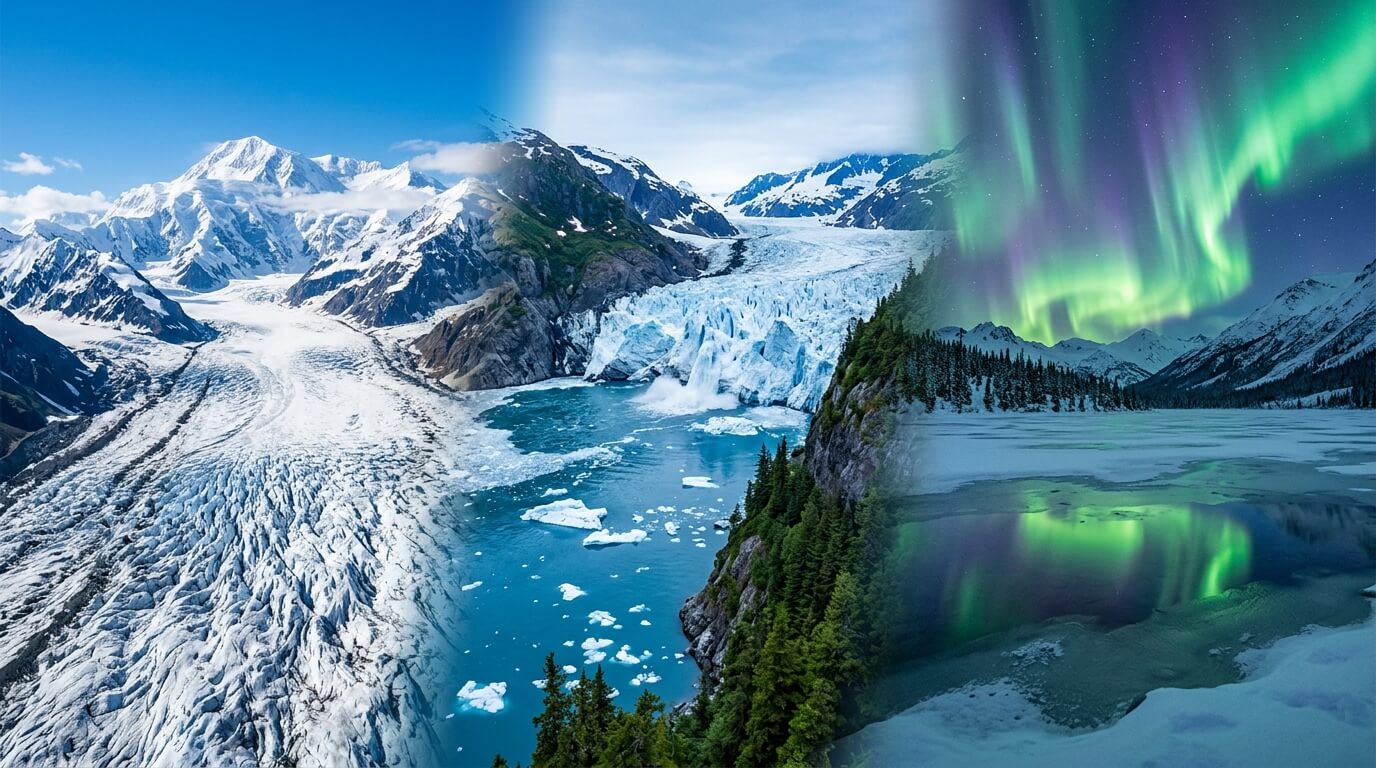
Alaska is America's last true frontier, a state so vast it could swallow Texas, California, and Montana combined and still have room to spare. From the glacier-carved peaks surrounding Talkeetna and Denali National Park to the tidewater ice fields outside Juneau, the aurora-lit skies above Fairbanks, and the Native heritage and salmon runs of Ketchikan, Alaska rewards travelers willing to go further than they normally would for genuinely unforgettable scenery and wildlife. Whether you are searching for the best tours in Alaska, tickets to top Alaska attractions, the best places to visit in Alaska, or simply the most memorable things to do in Alaska, this guide covers everything worth knowing before you go.
Top Attractions, Tours and Tickets in Alaska
Denali National Park and the Interior
Denali National Park and Preserve is home to Denali itself, the tallest peak in North America at over 20,300 feet, along with vast stretches of tundra, boreal forest, and some of the best wildlife viewing in the state. Grizzly bears, moose, caribou, wolves, and Dall sheep are regularly spotted from the park road, and only a limited number of vehicles are permitted past mile 15 each day, which keeps the interior feeling remote even at the height of summer. Guided naturalist walking tours are one of the best ways to actually get into the park on foot rather than just viewing it from a bus window, and flightseeing tours out of nearby Talkeetna offer a completely different perspective for travelers who want to see the summit up close without attempting to climb it. Because the mountain generates its own weather, clear views of the peak are never guaranteed on any single day, and multi-day stays significantly improve the odds.
Book the Denali Naturalist Walking Tour →Anchorage and Wildlife Day Trips
Anchorage is Alaska's largest city and the starting point for most visitors, sitting within driving distance of glaciers, wildlife refuges, and some of the best day-trip scenery in the state. The Alaska Wildlife Conservation Center along the Seward Highway lets visitors see bears, moose, musk oxen, and bald eagles up close in a rehabilitation setting, and the historic Alaska Railroad runs some of the most scenic rail routes in North America between Anchorage, Denali, and the coast. Guided wildlife day tours with hotel pickup are a popular option for travelers who do not want to rent a car, typically combining the Seward Highway's coastal views with stops at the Wildlife Conservation Center and Portage Glacier.
Book an Anchorage Wildlife Day Tour →Glacier Cruises and Coastal Alaska
Southcentral and Southeast Alaska are defined by tidewater glaciers, and the boat trips that get travelers close to them are consistently rated among the best experiences in the state. From Seward, cruises into Kenai Fjords National Park pass Bear Glacier and active tidewater glaciers like Aialik and Holgate, often with whales, sea otters, puffins, and sea lions along the way. Kenai Fjords glacier and wildlife cruises typically run five to eight hours and include a meal. In Juneau, the Mendenhall Glacier sits just outside downtown, and combination tours pairing the glacier with whale watching in nearby waters are consistently among the highest-rated shore excursions for cruise passengers.
Book a Kenai Fjords Glacier Cruise →Northern Lights and Winter Adventures
Fairbanks sits directly beneath the aurora oval, which makes it one of the most reliable places in the world to see the Northern Lights, typically visible on clear nights from late August through April. Guided aurora tours drive guests away from city light pollution to dark viewing sites and typically run five to six hours late in the evening, and lodge-based tours offer heated viewing rooms with large windows for travelers who would rather not stand outside in sub-zero temperatures. Chena Hot Springs, about an hour outside Fairbanks, combines aurora viewing with natural hot spring soaking and is one of the most popular winter add-ons in the area. Sightings are never guaranteed since the aurora is a natural phenomenon, and most operators do not offer refunds if it does not appear.
Book a Fairbanks Northern Lights Tour →Alaska Native Culture and Totem Heritage
Ketchikan holds one of the largest collections of standing totem poles in the world, and totem viewing here is paired with genuine insight into Tlingit, Haida, and Tsimshian culture rather than just photo opportunities. Totem Bight State Historical Park and Saxman Native Village both feature dozens of hand-carved poles alongside clan houses and working carving centers, and Ketchikan's rainforest setting and salmon-rich waterways make it one of the most scenic small towns in Southeast Alaska. Totem pole and wildlife trolley tours are an efficient way to see the highlights in a single stop for cruise passengers with limited port time.
Book the Ketchikan Totem Pole & Wildlife Tour →Historic Gold Rush Towns and the Inside Passage
Skagway looks almost frozen in the year 1898, when it served as the main gateway for prospectors heading north during the Klondike Gold Rush. Wooden boardwalks, false-front saloons, and the White Pass and Yukon Route Railway, which climbs nearly 3,000 feet in twenty miles along the original prospectors' route, make it one of the most atmospheric stops in Southeast Alaska. Sitka, further south, was the capital of Russian Alaska before the 1867 purchase and still shows that history through onion-domed St. Michael's Cathedral and the Russian Bishop's House, alongside Tlingit totem poles at Sitka National Historical Park. Both towns are best reached by ferry or cruise ship, since neither is connected to Alaska's limited road system.
Fishing, Rivers, and Outdoor Adventures
Alaska's rivers and coastal waters produce some of the best sport fishing in the world, and Homer, on the southern tip of the Kenai Peninsula, has earned the nickname the Halibut Fishing Capital of the World for good reason. Salmon runs on the Kenai and Russian Rivers draw anglers from around the globe every summer, particularly during the July sockeye run when the riverbanks can get almost as crowded as the fish themselves. Kodiak Island, home to the Kodiak brown bear, offers both remote fishing lodges and some of the best bear viewing in the state, though most of the island is only reachable by boat or small plane. Outdoor outfitters across the state offer everything from guided fly-fishing to multi-day rafting and backcountry hiking trips for travelers looking to get well off the road system.
Major Cities and Places to Visit in Alaska
- Anchorage Tours & Tickets - Alaska's largest city, gateway for wildlife day trips, the Alaska Railroad, and the Alaska Native Heritage Center
- Fairbanks Tours & Tickets - Northern Lights viewing, the University of Alaska Fairbanks, Chena Hot Springs, and the gateway to the Arctic Circle
- Juneau Tours & Tickets - The state capital, reachable only by air or sea, with Mendenhall Glacier tours and whale watching just outside downtown
- Sitka Tours & Tickets - Russian America history, onion-domed St. Michael's Cathedral, and Tlingit totem poles at Sitka National Historical Park
- Ketchikan Tours & Tickets - The Salmon Capital of the World, with the largest collection of standing totem poles anywhere and a lush rainforest setting
- Seward Tours & Tickets - Gateway to Kenai Fjords National Park, glacier and wildlife cruises, and the Alaska SeaLife Center
- Skagway Tours & Tickets - Klondike Gold Rush history, wooden boardwalks, and the White Pass and Yukon Route scenic railway
- Homer Tours & Tickets - The Halibut Fishing Capital of the World, Kachemak Bay views, and a lively working artist community
- Talkeetna Tours & Tickets - The classic gateway town to Denali, with flightseeing tours over the mountain and a walkable historic downtown
- Kodiak Tours & Tickets - Home to the Kodiak brown bear, a working fishing fleet, and some of the best remote wildlife viewing in the state
Universities, Colleges and Sports Teams in Alaska
- University of Alaska Fairbanks in Fairbanks - Alaska's flagship research university, known for arctic and climate science and home to the UA Museum of the North.
- UAF Nanooks (sports team) in Fairbanks - NCAA Division I hockey program and one of the most closely followed college sports teams in the state.
- University of Alaska Anchorage in Anchorage - The state's largest university, with strong nursing, aviation, and Alaska Native studies programs.
- UAA Seawolves (sports team) in Anchorage - NCAA Division I hockey and skiing programs representing the state's largest city.
Alaska Demographics and Population
According to the 2024 American Community Survey, Alaska has a population of approximately 735,706 people across 665,384 square miles, ranking it 48th among U.S. states by population. The median household income is $92,788, and the largest racial and ethnic groups are Asian (6.42%), White (60.7%), American Indian and Alaska Native (13.79%), Native Hawaiian and Other Pacific Islander (1.55%), and Black or African American (3.1%). The median age is 35.6 years. Approximately 6.8% of residents live below the poverty line, compared to the national rate of 12.2%. Alaska's economy is anchored by oil and gas production along the Trans-Alaska Pipeline corridor, commercial fishing and seafood processing, tourism driven by the summer cruise season, and a large federal government and military presence.
When to Visit Alaska
Summer (June through August) is the best time to visit Alaska. The best time to visit Alaska for most travelers. Days stretch close to twenty hours of daylight in June, glaciers and wildlife are at their most accessible, and cruise ships and tour operators run at full capacity. Fall (September through November): A short but striking shoulder season. Tundra foliage turns brilliant red and gold by mid-September, crowds thin out fast, and aurora viewing becomes possible again as the skies darken. Winter (December through February): The prime season for Northern Lights viewing in Fairbanks and the Interior, along with dog sledding and the start of the Iditarod in March, though many rural roads and smaller tour operators shut down for the season. Spring (March through May): The quietest and least predictable season, with breakup weather, muddy trails, and many seasonal tour operators still closed until Memorial Day.
Frequently Asked Questions About Touring Alaska
Official Alaska Resources
The following official government websites provide additional planning resources, park information, and historical records for travelers visiting Alaska.
| Resource | Description | Website |
|---|---|---|
| State of Alaska | Official state government portal with links to all state agencies and services | www.alaska.gov |
| Travel Alaska | Official state tourism board with trip planning tools and a free vacation planner | www.travelalaska.com |
| Alaska State Parks | Official site for Alaska's state park system, including reservations, trails, and camping | dnr.alaska.gov/parks |
| Alaska Department of Fish and Game | State agency covering fishing and hunting regulations, licenses, and wildlife viewing information | www.adfg.alaska.gov |
| Denali National Park and Preserve | Official National Park Service site for Denali, including park road access and lottery information | www.nps.gov/dena |
| Kenai Fjords National Park | Official National Park Service site for Kenai Fjords, near Seward | www.nps.gov/kefj |
| Alaska Native Heritage Center | Cultural center in Anchorage dedicated to Alaska Native history, art, and traditions | www.alaskanative.net |
| Alaska State Archives | State agency preserving historical government records and documents | archives.alaska.gov |
| Alaska Marine Highway System | State-operated ferry service connecting coastal communities not reachable by road | dot.alaska.gov/amhs |
| Alaska Census Data | Official U.S. Census Bureau QuickFacts for Alaska population and demographic statistics | www.census.gov/quickfacts/AK |