Last updated August 16, 2026
The Best Tours & Places to Visit in Hawaii
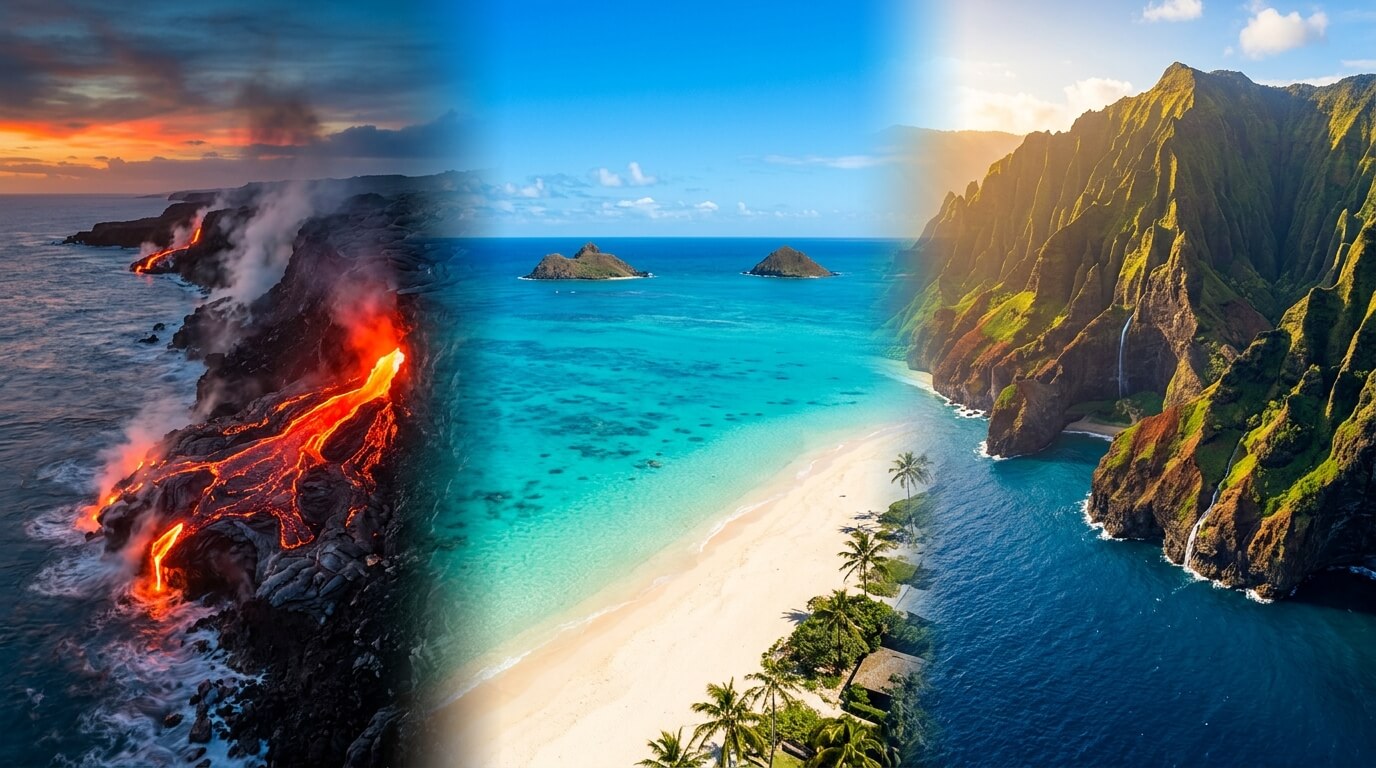
Hawaii sits nearly 2,500 miles from the nearest continent, and that isolation shows in landscapes and culture found nowhere else on Earth, from active volcanoes still adding new land to the Big Island to the sheer sea cliffs of Kauai's Na Pali Coast. From the surf and history of Honolulu to the winding Road to Hana on Maui, the lava fields of the Big Island, and the untouched coastline of Kauai, Hawaii rewards travelers willing to make the long flight. Whether you are searching for the best tours in Hawaii, tickets to top Hawaii attractions, the best places to visit in Hawaii, or simply the most memorable things to do in Hawaii, this guide covers everything worth knowing before you go.
Top Attractions, Tours and Tickets in Hawaii
Pearl Harbor and Honolulu
Pearl Harbor remains one of the most visited historic sites in the country, anchored by the USS Arizona Memorial, which sits directly above the sunken battleship where more than 900 sailors remain entombed following the December 7, 1941 attack. A short navy launch ride carries visitors out to the memorial itself, and the surrounding Pearl Harbor National Memorial visitor center includes museum exhibits and the decommissioned USS Missouri, where Japan formally surrendered in 1945. Combined Pearl Harbor and Honolulu city tours pair the memorial with stops at Iolani Palace, the National Memorial Cemetery of the Pacific, and the King Kamehameha Statue, and advance reservations for the Arizona Memorial are strongly recommended since same-day tickets are limited.
Book a Pearl Harbor & Honolulu Tour →Maui and the Road to Hana
The Road to Hana packs 620 curves and 59 bridges into roughly 64 miles of coastal highway, winding past waterfalls, black sand beaches, and rainforest lookouts on Maui's wild northeastern coast. Driving it independently is popular, but the road's narrow one-lane bridges and blind turns make guided tours a genuinely easier option for visitors who would rather watch the scenery than the road. Small-group Road to Hana sightseeing tours typically run a full day with stops at Hoʻokipa Lookout, waterfalls, and Waiʻanapanapa State Park's black sand beach, and most include breakfast and a hot lunch along the route.
Book a Road to Hana Tour →Hawaii Volcanoes National Park
Hawaii Volcanoes National Park on the Big Island protects two of the world's most active volcanoes, Kilauea and Mauna Loa, and remains one of the few places on Earth where visitors can regularly see fresh volcanic activity up close. The Kilauea Iki Crater trail, the Nahuku lava tube, and steam vents along the crater rim make for a full day of hiking even without active lava flow, and Punaluʻu's black sand beach nearby adds a chance to see Hawaiian green sea turtles basking on the shore. Full-day tours with lunch and transfer typically combine the national park with the black sand beach and a stop in the Kona coffee belt, removing the need to rent a car to see the island's highlights.
Book a Hawaii Volcanoes National Park Tour →Kauai and the Na Pali Coast
Kauai's Na Pali Coast holds 17 miles of sheer, fluted sea cliffs rising up to 4,000 feet directly from the Pacific, with no road access at all, which makes boat and helicopter tours the only practical way for most visitors to see the coastline in full. Waimea Canyon, often called the Grand Canyon of the Pacific, adds a dramatically different, drivable landscape of red-earth gorges on the island's west side. Deluxe catamaran tours along the Na Pali Coast typically include snorkeling stops and a chance to spot spinner dolphins, and sunset sailing options are widely available for travelers who want to see the cliffs lit up in golden light.
Book a Na Pali Coast Catamaran Tour →Hawaiian Culture and Luau Experiences
A traditional luau remains one of the most accessible ways for visitors to experience Hawaiian culture directly, typically combining a roasted kalua pig prepared in an underground imu oven with hula performances, Polynesian fire dancing, and live music. Quality and authenticity vary significantly between the large resort-style luaus aimed at tour groups and smaller, more culturally focused experiences, so reading reviews carefully before booking is worth the extra few minutes. The Ka Moana Luau at Sea Life Park pairs an oceanfront setting on Oahu with dinner and a full cultural show, and similar luau experiences are widely available on Maui and the Big Island as well.
Book a Luau Dinner & Show →Waikiki Beach and Oahu's North Shore
Waikiki Beach put Hawaii on the map as a surfing and tourism destination over a century ago, and its two-mile stretch of sand backed by high-rise hotels remains the most developed and easily walkable beach in the state, with Diamond Head's volcanic crater visible along the shoreline. Oahu's North Shore offers a completely different pace roughly an hour away, home to some of the biggest and most famous surf breaks in the world, including the Banzai Pipeline, along with laid-back beach towns and roadside shrimp trucks. Winter swells on the North Shore regularly top 20 feet and draw professional surfers from around the globe, while the calmer summer months make the same beaches far more approachable for casual swimmers.
Molokai, Lanai, and the Quiet Islands
Molokai and Lanai remain the least developed of Hawaii's visitor-accessible islands, with no traffic lights, no high-rise buildings, and a fraction of the visitor infrastructure found on Oahu or Maui. Molokai holds the world's tallest sea cliffs along its remote north shore and the Kalaupapa Peninsula, a former leprosy settlement now preserved as a National Historical Park accessible only by mule trail, small plane, or a strenuous hike. Lanai, once almost entirely a Dole pineapple plantation, has reinvented itself around two high-end resorts while keeping the rest of the island largely undeveloped, with red-dirt roads leading to the otherworldly rock formations of Garden of the Gods.
Major Cities and Places to Visit in Hawaii
- Honolulu Tours & Tickets - Waikiki Beach, Pearl Harbor, Diamond Head, and Hawaii's largest city on Oahu
- Lahaina Tours & Tickets - A historic former whaling town on Maui, rebuilding after the 2023 wildfire while honoring its heritage
- Kihei Tours & Tickets - A sunny South Maui beach town popular for snorkeling and whale watching in winter
- Kailua-Kona Tours & Tickets - The Big Island's main west-side hub, known for Kona coffee farms and deep-sea fishing
- Hilo Tours & Tickets - A lush, rainy East Hawaii Island town and the closest base for Hawaii Volcanoes National Park
- Lihue Tours & Tickets - Kauai's main airport town and a jumping-off point for Wailua Falls and the Na Pali Coast
- Princeville Tours & Tickets - An upscale North Shore Kauai resort community near the Na Pali Coast trailheads
- Hanalei Tours & Tickets - A small, taro-farming North Shore Kauai town framed by dramatic green mountains
- Lanai City Tours & Tickets - The only town on the small, quiet island of Lanai, once a Dole pineapple plantation hub
- Kaunakakai Tours & Tickets - Molokai's main town, offering the most undeveloped and traditionally Hawaiian island experience
Universities, Colleges and Sports Teams in Hawaii
- University of Hawaii at Manoa in Honolulu - The state's flagship public university, with strong oceanography, astronomy, and Pacific and Asian studies programs.
- Hawaii Rainbow Warriors (sports team) in Honolulu - NCAA Division I program whose football team draws some of the most devoted local support of any college program in the country.
Hawaii Demographics and Population
According to the 2024 American Community Survey, Hawaii has a population of approximately 1,445,235 people across 6,423 square miles, ranking it 40th among U.S. states by population. The median household income is $100,389, and the largest racial and ethnic groups are Asian (37.27%), White (22.51%), American Indian and Alaska Native (0.27%), Native Hawaiian and Other Pacific Islander (10.31%), and Black or African American (1.92%). The median age is 41.0 years. Approximately 10.0% of residents live below the poverty line, compared to the national rate of 12.2%. Hawaii's economy is dominated by tourism, which accounts for roughly a fifth of the state's GDP, alongside a significant U.S. military presence anchored by Pearl Harbor and Joint Base Pearl Harbor-Hickam, agriculture including coffee and macadamia nuts, and a cost of living driven up by the state's dependence on imported goods.
When to Visit Hawaii
Summer (June through August) is the best time to visit Hawaii. Hawaii's dry season and the most reliable stretch for calm ocean conditions and consistent sunshine, though it is also peak vacation season, which means the highest prices and biggest crowds. Fall (September through November): A quieter shoulder season with noticeably fewer travelers than summer, and one of the better times to find lower airfare and hotel rates before the winter holiday rush. Winter (December through February): Hawaii's wetter season, but also peak humpback whale watching season from December through April and the season for the biggest surf swells on Oahu's North Shore. Spring (March through May): A comfortable, moderately priced shoulder season, though rain showers and trade winds remain more variable island to island than in summer.
Frequently Asked Questions About Touring Hawaii
Official Hawaii Resources
The following official government websites provide additional planning resources, park information, and historical records for travelers visiting Hawaii.
| Resource | Description | Website |
|---|---|---|
| State of Hawaii | Official state government portal with links to all state agencies and services | portal.ehawaii.gov |
| Go Hawaii | Official state tourism website with island guides and trip planning tools | www.gohawaii.com |
| Hawaii Division of State Parks | Official site for Hawaii's state park system across five islands, including permits and camping | dlnr.hawaii.gov/dsp/ |
| Hawaii Volcanoes National Park | Official National Park Service site for Hawaii Volcanoes National Park | www.nps.gov/havo |
| Pearl Harbor National Memorial | Official National Park Service site for the USS Arizona Memorial and Pearl Harbor visitor center | www.nps.gov/valr |
| Kalaupapa National Historical Park | Official National Park Service site for the historic settlement on Molokai | www.nps.gov/kala |
| Hawaii State Archives | State agency preserving historical government records dating to the Hawaiian monarchy | ags.hawaii.gov/archives/ |
| Hawaii Census Data | Official U.S. Census Bureau QuickFacts for Hawaii population and demographic statistics | www.census.gov/quickfacts/HI |