Last updated August 16, 2026
The Best Tours & Places to Visit in Indiana
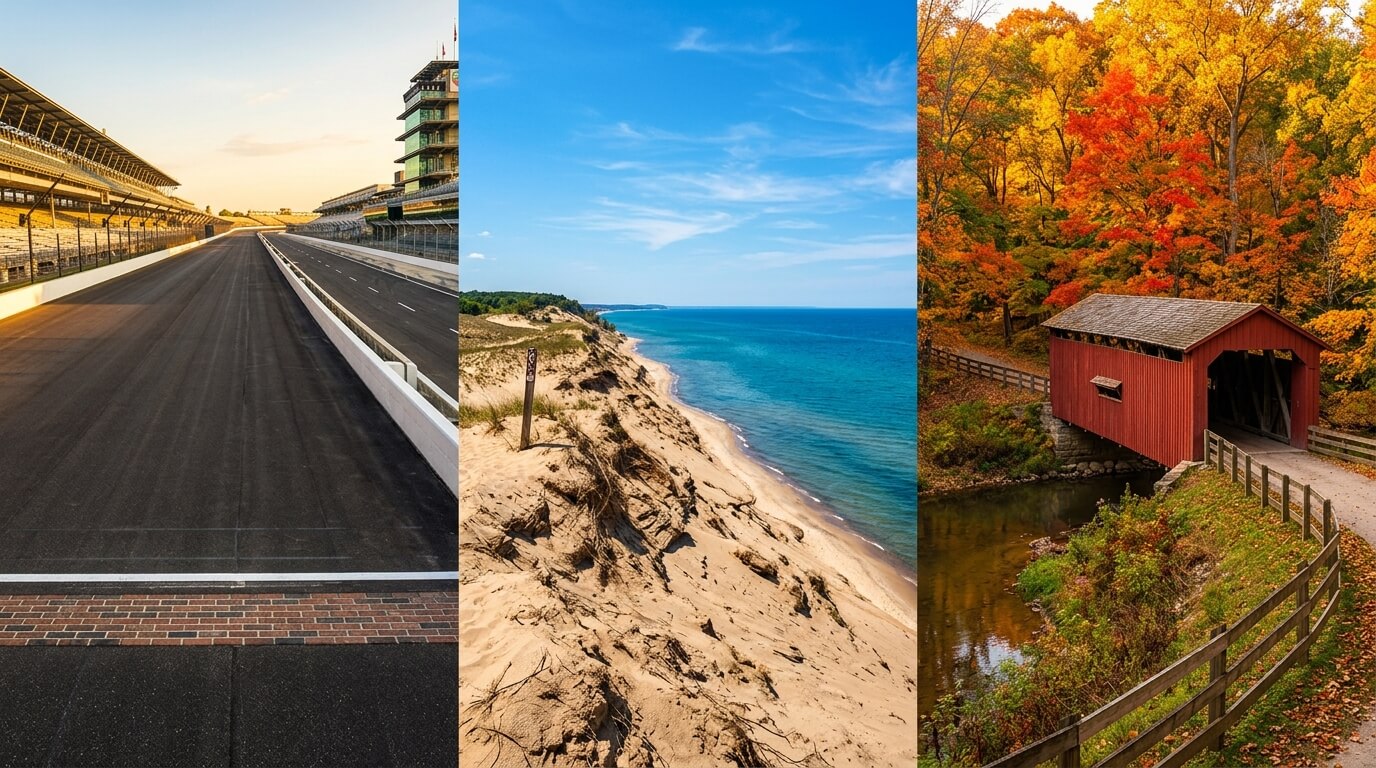
Indiana is best known as the home of the Indianapolis 500, but the state holds a wider range of scenery than its Crossroads of America nickname suggests, from Lake Michigan sand dunes in the north to limestone caves and a historic resort town in the south. From the racing history and downtown museums of Indianapolis to the dunes and beaches of the Lake Michigan shoreline, the college-town energy of Bloomington, and the restored 19th-century grandeur of French Lick, Indiana rewards travelers who look past the interstate. Whether you are searching for the best tours in Indiana, tickets to top Indiana attractions, the best places to visit in Indiana, or simply the most memorable things to do in Indiana, this guide covers everything worth knowing before you go.
Top Attractions, Tours and Tickets in Indiana
The Indianapolis Motor Speedway
The Indianapolis Motor Speedway has hosted the Indianapolis 500 since 1911, and the track remains the largest sports venue in the world by seating capacity, with room for well over 250,000 spectators on race day. Outside race weekends, the on-site museum houses dozens of historic Indy cars, including past winning vehicles, and track tours give visitors a chance to ride the famous 2.5-mile oval itself. Museum tickets include access to the full collection of historic race cars and memorabilia, and the surrounding Speedway neighborhood has grown into its own small entertainment district built around race culture.
Book Indianapolis Motor Speedway Museum Tickets →Downtown Indianapolis and Family Attractions
Downtown Indianapolis centers on Monument Circle, home to the Soldiers' and Sailors' Monument, with the White River State Park nearby holding the Indianapolis Zoo, the NCAA Hall of Champions, and the Eiteljorg Museum of American Indian and Western Art. The Children's Museum of Indianapolis, the largest children's museum in the world, draws families from across the Midwest with hands-on exhibits spanning paleontology, space exploration, and world cultures. The Indy Attraction Pass bundles admission to several of the city's top sights, including the Children's Museum, Indianapolis Zoo, and Conner Prairie living history museum, into a single mobile ticket.
Book the Indy Attraction Pass →Indiana Dunes National Park
Indiana Dunes National Park protects 15 miles of Lake Michigan shoreline roughly an hour from Chicago, with towering sand dunes, including 192-foot Mount Baldy, rising directly from the water's edge. More than 50 miles of trails wind through a surprising range of ecosystems packed into a small area, from oak savanna and wetlands to prairie remnants, and the park has been designated a Dark Sky site for stargazing well away from Chicago's light pollution. West Beach and the Indiana Dunes State Park within the national park's boundaries offer the most developed swimming and picnic facilities for visitors who want a beach day rather than a full hike.
French Lick and West Baden Springs
French Lick and neighboring West Baden Springs built their reputation in the late 1800s and early 1900s around natural mineral springs, drawing wealthy visitors to grand resort hotels that still anchor both towns today. The West Baden Springs Hotel's domed atrium, once billed as the eighth wonder of the world when completed in 1902, remains one of the most striking hotel interiors in the country after a major restoration. Larry Bird, one of basketball's most celebrated players, grew up in French Lick, and the town has leaned into that connection alongside its resort and casino tourism.
Bloomington and Indiana University
Bloomington centers on Indiana University's limestone-heavy campus, consistently ranked among the most beautiful in the country, with the Sample Gates and Showalter Fountain among its most recognizable landmarks. The city's downtown square mixes a strong independent restaurant and music scene with the kind of walkability that has made it a repeat entry on best college town lists nationally. Nearby Lake Monroe, Indiana's largest lake, and the limestone quarries that once supplied stone for buildings across the country add outdoor and industrial history options just outside town.
South Bend and Notre Dame
The University of Notre Dame's Golden Dome and Basilica of the Sacred Heart anchor one of the most recognizable college campuses in the country, and its football program's history, including a record number of national championships, has made game days in South Bend a genuine pilgrimage for fans regardless of their own alma mater. The Studebaker National Museum downtown documents South Bend's history as a major American automobile manufacturing hub before Studebaker closed its doors in 1963, and the East Race Waterway, a man-made whitewater course through downtown, offers kayaking and rafting in an unlikely urban setting.
Brown County and Southern Indiana
Brown County State Park, Indiana's largest state park, draws visitors from across the Midwest every October for some of the best fall foliage in the region, with overlooks across rolling, densely forested hills that feel more Appalachian than Midwestern. The small town of Nashville, at the park's edge, has built an entire economy around art galleries, antique shops, and country inns catering to leaf-peeping visitors. Further south, Marengo Cave and Wyandotte Caves add an underground counterpoint to the region's hills, with guided tours through limestone passages that have drawn visitors since the 1800s.
Major Cities and Places to Visit in Indiana
- Indianapolis Tours & Tickets - The Indianapolis Motor Speedway, a walkable downtown, and a strong museum and monument district
- Bloomington Tours & Tickets - Home to Indiana University and a lively college-town food and music scene
- South Bend Tours & Tickets - Home to the University of Notre Dame and its iconic Golden Dome and football tradition
- French Lick Tours & Tickets - A restored early 1900s resort town with historic hotels, mineral springs, and a casino
- Fort Wayne Tours & Tickets - Indiana's second-largest city, with a restored historic Landing riverfront district
- Evansville Tours & Tickets - A Ohio River city in southern Indiana with a strong riverboat and industrial heritage
- Nashville Tours & Tickets - A small Brown County arts town known for fall foliage, galleries, and country inns
- Michigan City Tours & Tickets - A Lake Michigan lakefront town and the closest base for Indiana Dunes National Park
- West Lafayette Tours & Tickets - Home to Purdue University and a growing research and technology corridor
- Columbus Tours & Tickets - A small city internationally recognized for its concentration of modernist architecture
Universities, Colleges and Sports Teams in Indiana
- Indiana University in Bloomington - The state's flagship public university, known for its limestone campus and strong music and business schools.
- Indiana Hoosiers (sports team) in Bloomington - NCAA Division I program with one of the most storied college basketball traditions in the country.
- Purdue University in West Lafayette - A leading public research university known for engineering, aviation, and agricultural programs.
- Purdue Boilermakers (sports team) in West Lafayette - NCAA Division I program and rival of Indiana University in one of college basketball's oldest rivalries.
- University of Notre Dame in South Bend - A private Catholic research university with one of the most nationally recognized football programs in the country.
- Notre Dame Fighting Irish (sports team) in South Bend - An NCAA Division I football independent whose program has won more consensus national championships than all but a few schools in history.
Indiana Demographics and Population
According to the 2024 American Community Survey, Indiana has a population of approximately 6,924,275 people across 35,867 square miles, ranking it 17th among U.S. states by population. The median household income is $71,957, and the largest racial and ethnic groups are Asian (2.6%), White (78.5%), Hispanic (8.4%), and Black or African American (9.3%). The median age is 38.0 years. Approximately 12.3% of residents live below the poverty line, compared to the national rate of 12.2%. Indiana's economy is anchored by manufacturing, particularly automotive parts and pharmaceuticals, agriculture including corn and soybeans, and logistics tied to its central location along major interstate corridors.
When to Visit Indiana
Fall (September through November) is the best time to visit Indiana. The best time to visit Indiana. Brown County's hills turn some of the best foliage color in the Midwest by mid-October, and temperatures are comfortable statewide. Summer (June through August): Warm and busy, with the Indianapolis 500 held every Memorial Day weekend and Indiana Dunes' beaches at their most crowded. Spring (March through May): A mild, gradually warming shoulder season, though spring also brings Indiana's most active severe weather, including occasional tornadoes. Winter (December through February): Cold with regular snow, and the quietest season for outdoor attractions, though Indianapolis's downtown museums and Speedway Museum stay open year-round.
Frequently Asked Questions About Touring Indiana
Official Indiana Resources
The following official government websites provide additional planning resources, park information, and historical records for travelers visiting Indiana.
| Resource | Description | Website |
|---|---|---|
| State of Indiana | Official state government portal with links to all state agencies and services | www.in.gov |
| Visit Indiana | Official state tourism website with travel guides and trip planning tools | www.visitindiana.com |
| Indiana Department of Natural Resources | State agency overseeing Indiana state parks, including Brown County and Indiana Dunes State Park | www.in.gov/dnr |
| Indiana Dunes National Park | Official National Park Service site for Indiana Dunes | www.nps.gov/indu |
| Indianapolis Motor Speedway | Official site for the Speedway, including race tickets and museum admission | www.indianapolismotorspeedway.com |
| University of Notre Dame | Official site for the University of Notre Dame, including campus visitor information | www.nd.edu |
| Indiana State Archives | State agency preserving historical government records and documents | www.in.gov/iara/divisions/state-archives |
| Indiana Census Data | Official U.S. Census Bureau QuickFacts for Indiana population and demographic statistics | www.census.gov/quickfacts/IN |