Last updated August 16, 2026
The Best Tours & Places to Visit in Iowa
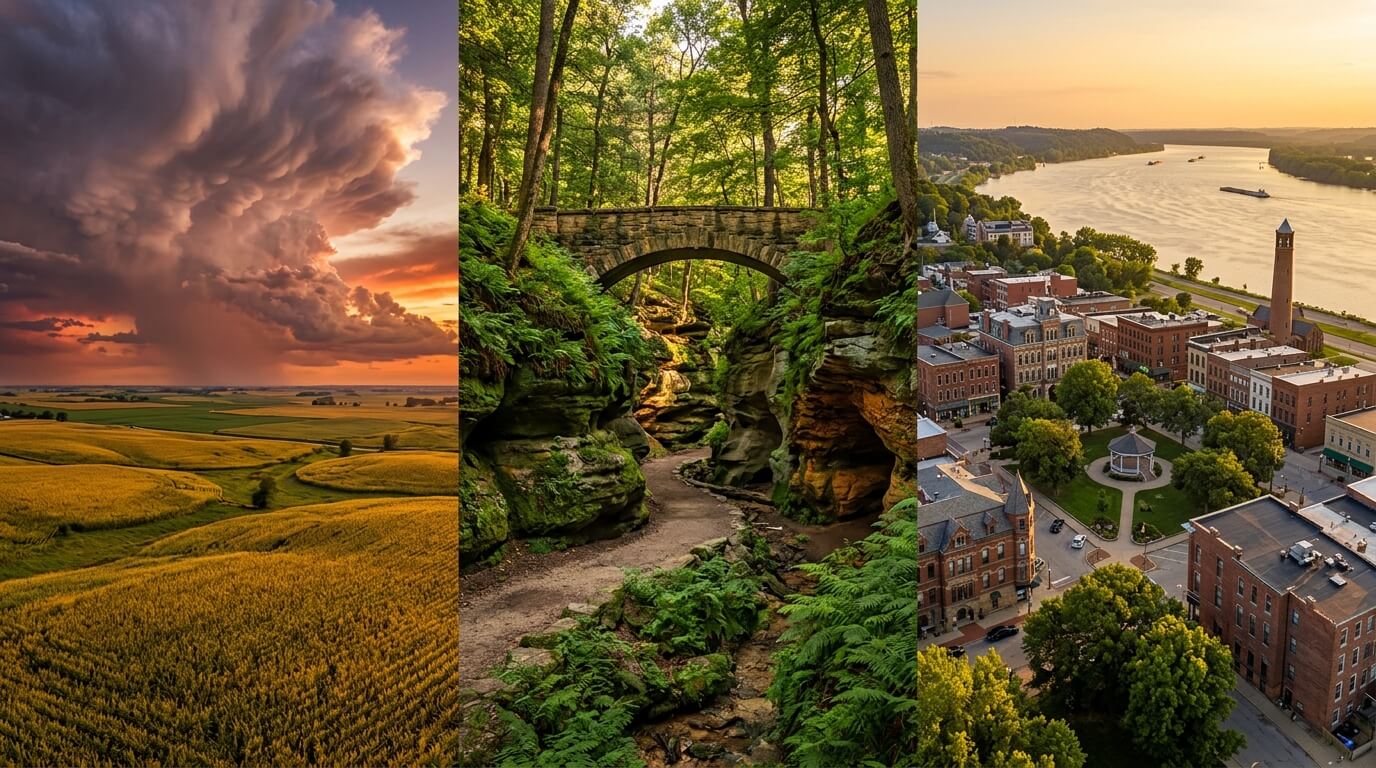
Iowa rewards travelers who look past the interstate cornfields, from a filmed-in-a-real-cornfield baseball diamond that draws pilgrims from around the world to a cluster of 19th-century German communal villages still producing their own wine and woolens. From the sculpture-filled downtown of Des Moines to the movie site at Field of Dreams, the historic Amana Colonies, and the bluff-top river towns along the Mississippi, Iowa offers more variety than its reputation as flyover country suggests. Whether you are searching for the best tours in Iowa, tickets to top Iowa attractions, the best places to visit in Iowa, or simply the most memorable things to do in Iowa, this guide covers everything worth knowing before you go.
Top Attractions, Tours and Tickets in Iowa
Field of Dreams and Baseball Pilgrimage Sites
The Field of Dreams movie site near Dyersville remains one of the most unusual pilgrimage destinations in American sports, a genuine cornfield-adjacent baseball diamond built for the 1989 film that has drawn visitors, and later a Major League Baseball game in 2021, ever since. Visitors can still walk out of the surrounding corn onto the actual diamond used in the movie, play catch on the infield, and browse a gift shop dedicated entirely to the film's legacy. The site remains privately operated and largely unchanged since filming, which is a meaningful part of its appeal for fans who grew up on the movie's "if you build it, he will come" ethos.
Des Moines and the State Capital
Des Moines pairs a gold-domed State Capitol building, one of the most ornate in the country, with a downtown sculpture park that has quietly turned the city into an unexpected public art destination. The John and Mary Pappajohn Sculpture Park displays works by internationally known artists, including Jaume Plensa and Louise Bourgeois, in a free, walkable outdoor setting near downtown. The Iowa State Fair, held each August, remains one of the largest and most iconic state fairs in the country, famous for its butter cow sculpture and deep-fried food on a stick.
The Amana Colonies
The Amana Colonies preserve seven villages founded in the 1850s by German religious separatists who lived communally, sharing meals, work, and property until the community reorganized in 1932. That history is still visible today in the villages' brick and stone architecture, working woolen mill, and wineries and breweries that carry on the community's traditional crafts. Spring and fall festivals, including Maifest and Oktoberfest, draw the largest crowds, and the Amana Heritage Museum offers the clearest overview of the colonies' communal history for visitors unfamiliar with the story before arriving.
Dubuque and the Mississippi River Bluffs
Dubuque sits along a stretch of the Mississippi River defined by dramatic limestone bluffs rather than the flat farmland found across most of the state, and the Fenelon Place Elevator, billed as the world's shortest, steepest scenic railway, has carried passengers up one of those bluffs since 1882. The National Mississippi River Museum and Aquarium documents the river's ecology and steamboat history along the downtown riverfront, and the surrounding bluff country offers hiking and mountain biking not typically associated with Iowa. Guided zipline tours through Union Park add an adventure option above the bluffs for visitors looking for something more active than sightseeing.
Book a Dubuque Zipline Tour →Iowa City and the Quad Cities
Iowa City holds the distinction of being one of only a handful of UNESCO Cities of Literature in the world, a designation tied to the University of Iowa's famed Writers' Workshop, which has produced an outsized share of major American authors. The compact, walkable downtown mixes independent bookstores and college-town bars with the university's own art museum and a strong live music scene. The Quad Cities, straddling the Mississippi River between Davenport and Bettendorf in Iowa and Rock Island and Moline in Illinois, add riverboat casinos, the John Deere Pavilion, and one of the largest concentrations of bald eagles in the Midwest during winter months.
Effigy Mounds and Northeast Iowa
Effigy Mounds National Monument preserves more than 200 Native American burial and ceremonial mounds along the Mississippi River, including several shaped like bears and birds, built by Woodland-era peoples between roughly 500 BCE and 1300 CE. The surrounding northeast Iowa bluff country, sometimes called Iowa's Little Switzerland, offers a landscape of steep, forested hills and trout streams that stands out sharply from the flat farmland covering most of the state. The nearby town of Decorah leans into its Norwegian heritage with the Vesterheim National Norwegian-American Museum, one of the most comprehensive collections of Norwegian immigrant history in the country.
Rural Iowa and Small-Town Highways
Much of Iowa's appeal lies away from any single headline attraction, in small towns along the state's scenic byways where grain elevators, century-old town squares, and family-run diners define the pace of travel. The Villages of Van Buren, a cluster of unincorporated 19th-century river towns in southeast Iowa, and the covered bridges of Madison County, made famous by the novel and film of the same name, both reward a slower, more deliberate road trip than the interstate allows. Iowa's network of small state parks and county conservation areas, largely unknown outside the state, offer some of the least crowded hiking and camping in the Midwest.
Major Cities and Places to Visit in Iowa
- Des Moines Tours & Tickets - The state capital, the Pappajohn Sculpture Park, and the annual Iowa State Fair each August
- Dubuque Tours & Tickets - A bluff-top Mississippi River town with the world's shortest, steepest scenic railway
- Iowa City Tours & Tickets - Home to the University of Iowa and a UNESCO City of Literature designation
- Cedar Rapids Tours & Tickets - Home to the National Czech and Slovak Museum and a growing arts and food scene
- Davenport Tours & Tickets - The largest of the Quad Cities straddling the Mississippi River between Iowa and Illinois
- Dyersville Tours & Tickets - Home to the real Field of Dreams movie site, still drawing baseball pilgrims to its cornfield diamond
- Amana Tours & Tickets - The heart of the historic Amana Colonies, a cluster of 19th-century German communal villages
- Decorah Tours & Tickets - A bluff-country town in northeast Iowa with strong Norwegian heritage and access to Effigy Mounds
- Ames Tours & Tickets - Home to Iowa State University and Reiman Gardens
- Sioux City Tours & Tickets - A Missouri River city with Lewis and Clark history and a growing riverfront district
Universities, Colleges and Sports Teams in Iowa
- University of Iowa in Iowa City - The state's oldest public university, home to the internationally renowned Iowa Writers' Workshop.
- Iowa Hawkeyes (sports team) in Iowa City - NCAA Division I program competing in the Big Ten Conference, with a passionately followed wrestling and football tradition.
- Iowa State University in Ames - The state's land-grant university, known for agricultural, engineering, and design programs.
- Iowa State Cyclones (sports team) in Ames - NCAA Division I program competing in the Big 12 Conference.
Iowa Demographics and Population
According to the 2024 American Community Survey, Iowa has a population of approximately 3,190,369 people across 55,869 square miles, ranking it 32nd among U.S. states by population. The median household income is $75,501, and the largest racial and ethnic groups are Asian (2.5%), White (85.6%), Hispanic (7%), and Black or African American (3.9%). The median age is 39.0 years. Approximately 6.9% of residents live below the poverty line, compared to the national rate of 12.2%. Iowa's economy is anchored by agriculture, particularly corn, soybeans, and hog production, ethanol and biofuel processing, insurance and financial services centered in Des Moines, and advanced manufacturing.
When to Visit Iowa
Fall (September through November) is the best time to visit Iowa. The best time to visit Iowa. Harvest season brings comfortable temperatures and good color along the Mississippi River bluffs, and the Amana Colonies' fall festivals are in full swing. Summer (June through August): Warm and busy, with the Iowa State Fair held every August and the Field of Dreams site at its most popular for baseball fans on summer road trips. Spring (March through May): A mild shoulder season and the timing for the Amana Colonies' Maifest celebration, though spring also brings the state's most active severe weather. Winter (December through February): Cold and often snowy, with bald eagles gathering along the Mississippi River near the Quad Cities and Dubuque, drawing dedicated birdwatchers despite the temperatures.
Frequently Asked Questions About Touring Iowa
Official Iowa Resources
The following official government websites provide additional planning resources, park information, and historical records for travelers visiting Iowa.
| Resource | Description | Website |
|---|---|---|
| State of Iowa | Official state government portal with links to all state agencies and services | www.iowa.gov |
| Travel Iowa | Official state tourism website with travel guides and trip planning tools | www.traveliowa.com |
| Iowa Department of Natural Resources | State agency overseeing Iowa state parks, wildlife, and fishing and hunting regulations | www.iowadnr.gov |
| Effigy Mounds National Monument | Official National Park Service site for Effigy Mounds | www.nps.gov/efmo |
| Amana Colonies Visitors Bureau | Official visitor information site for the Amana Colonies historic villages | www.amanacolonies.com |
| State Historical Society of Iowa | State agency preserving historical government records and documents | history.iowa.gov |
| Iowa Census Data | Official U.S. Census Bureau QuickFacts for Iowa population and demographic statistics | www.census.gov/quickfacts/IA |