Last updated August 16, 2026
The Best Tours & Places to Visit in Kansas
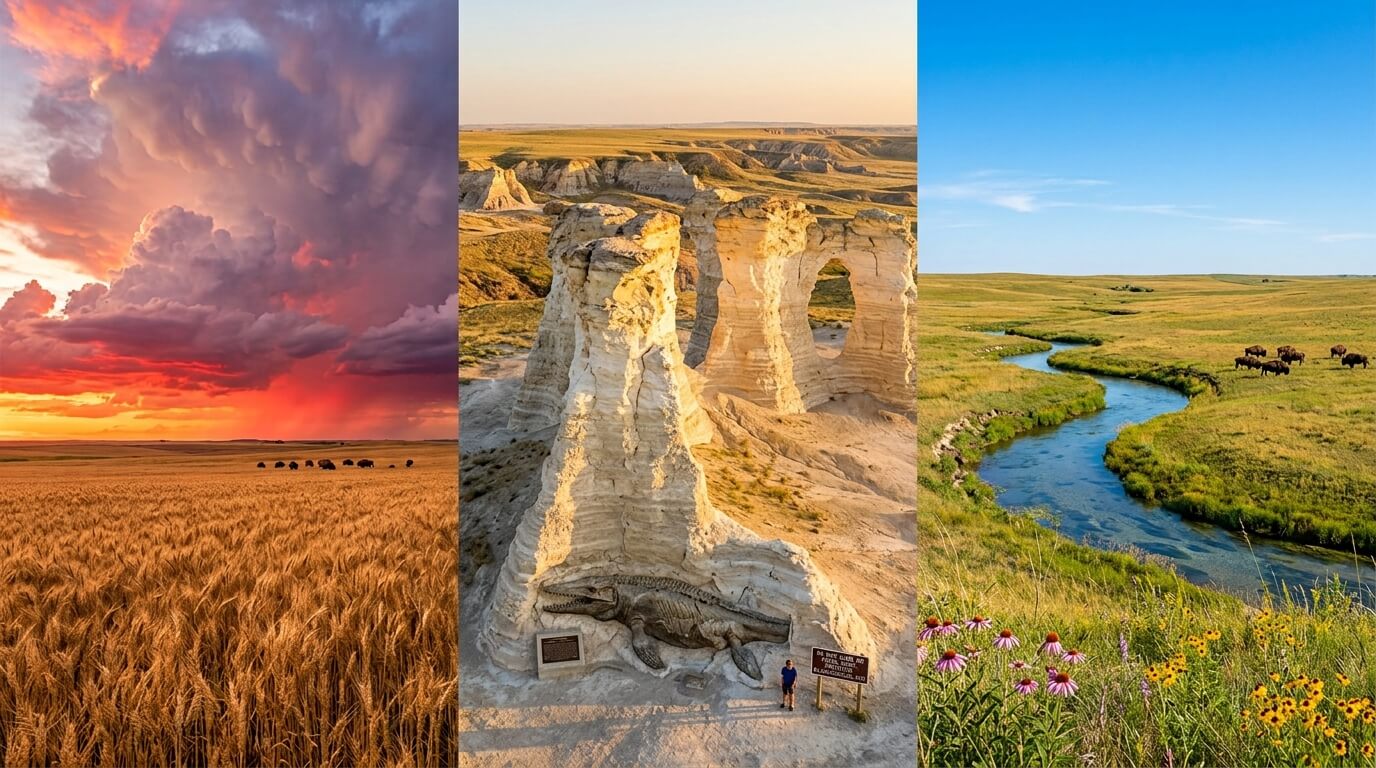
Kansas rarely tops anyone's must-visit list, but the state holds real surprises for travelers willing to look, from a Space Race-era artifact collection rivaling the Smithsonian to a Supreme Court case that reshaped American public education. From the aviation heritage of Wichita to the Wild West history of Dodge City, the rolling tallgrass prairie of the Flint Hills, and the Cold War-era space artifacts at the Cosmosphere in Hutchinson, Kansas rewards travelers who trade the interstate for a slower route. Whether you are searching for the best tours in Kansas, tickets to top Kansas attractions, the best places to visit in Kansas, or simply the most memorable things to do in Kansas, this guide covers everything worth knowing before you go.
Top Attractions, Tours and Tickets in Kansas
Wichita and Aviation History
Wichita has earned the nickname the Air Capital of the World, home to major aircraft manufacturers including Cessna, Beechcraft, and Spirit AeroSystems, and that history is preserved in depth at the Kansas Aviation Museum, housed in a restored 1935 art deco terminal that once served as the city's original airport. Old Town, a converted warehouse district downtown, mixes restaurants, breweries, and live music venues into one of the more walkable stretches of any Kansas city. The Keeper of the Plains, a 44-foot steel sculpture overlooking the confluence of the Arkansas and Little Arkansas Rivers, honors the area's Native American heritage and lights up with a nightly flame ritual during summer months.
The Cosmosphere and Hutchinson
The Cosmosphere in Hutchinson holds one of the largest collections of American and Russian space artifacts outside the Smithsonian, including the actual Apollo 13 command module and a fully restored German V-2 rocket, the kind of collection few visitors expect to find in central Kansas. The museum grew out of a small planetarium program in the 1960s and has since restored spacecraft for both NASA and the Smithsonian, giving it a level of institutional credibility unusual for a museum of its size. Underground Salt Museum tours at the nearby Strataca site, set 650 feet below ground in a still-active salt mine, add a completely different kind of subterranean attraction within a short drive.
Dodge City and the Wild West
Dodge City built its reputation as one of the most notorious cattle towns of the American frontier, patrolled in the 1870s and 1880s by lawmen including Wyatt Earp and Bat Masterson during its peak as a railhead for Texas longhorn cattle drives. The Boot Hill Museum, built on the site of the city's original 1870s cemetery and business district, recreates Front Street with period buildings, staged gunfight reenactments, and an extensive collection of frontier-era artifacts. The Santa Fe Trail Tracks and Trail of Fame downtown trace the broader history of the trade route that first brought settlers and merchants through the region before the cattle drive era began.
The Flint Hills and Tallgrass Prairie
The Flint Hills hold the largest remaining stretch of unplowed tallgrass prairie in North America, protected in part because the region's thin, rocky soil was never suited to the plow that converted most of the rest of the Great Plains to farmland. Tallgrass Prairie National Preserve, near the small town of Strong City, protects more than 10,000 acres of this landscape alongside a restored 1881 ranch complex, with bison reintroduced to graze part of the preserve. Spring green-up and the region's annual controlled burns, a traditional prairie management practice, both draw photographers to the Flint Hills at very specific, short windows each year.
Topeka and Brown v. Board of Education
Topeka holds a central place in American Civil Rights history as the origin of Brown v. Board of Education, the 1954 Supreme Court case that declared racial segregation in public schools unconstitutional and overturned the doctrine of separate but equal. The Brown v. Board of Education National Historical Park, housed in the former Monroe Elementary School, one of the segregated schools named in the case, walks visitors through the case's origins, the trial, and its lasting impact on American education. The Kansas State Capitol, with its extensive interior murals depicting state history, including John Steuart Curry's famous and controversial John Brown mural, is open for tours a short walk from downtown.
Kansas City, Kansas and the Legends
The Kansas side of the Kansas City metro area has built its own distinct identity around motorsports and shopping rather than competing directly with the more historic downtown across the state line in Missouri. Kansas Speedway hosts NASCAR races each spring and fall, and the adjoining Legends Outlets and Village West district combines an outlet shopping center with Children's Mercy Park, home of Sporting Kansas City, and the Great Wolf Lodge indoor water park resort. The area functions as a practical, family-oriented base for visitors splitting time between the Kansas and Missouri sides of the metro.
Western Kansas and Monument Rocks
Western Kansas trades the rolling Flint Hills for flatter, drier high plains terrain, punctuated by genuinely unexpected landmarks like Monument Rocks, a set of 70-foot chalk formations on private land near Oakley that were designated the first National Natural Landmark in the country in 1968. Cheyenne Bottoms, near Great Bond, ranks among the most important wetland stopovers on the Central Flyway, drawing hundreds of thousands of migrating shorebirds each spring and fall. The region's vast distances between towns are part of the experience, with long, empty highways offering a version of the Great Plains that most travelers only imagine rather than actually visit.
Major Cities and Places to Visit in Kansas
- Wichita Tours & Tickets - Kansas's largest city, with deep aviation manufacturing roots and a walkable Old Town district
- Topeka Tours & Tickets - The state capital and site of the Brown v. Board of Education National Historical Park
- Hutchinson Tours & Tickets - Home to the Cosmosphere, one of the largest space artifact collections outside the Smithsonian
- Dodge City Tours & Tickets - A legendary Wild West cattle town, once patrolled by Wyatt Earp and Bat Masterson
- Kansas City Tours & Tickets - The Kansas side of the metro, home to the Kansas Speedway and the Legends Outlets district
- Lawrence Tours & Tickets - A college town on the Kansas River, home to the University of Kansas
- Manhattan Tours & Tickets - Home to Kansas State University and known locally as the Little Apple
- Abilene Tours & Tickets - Dwight D. Eisenhower's hometown, with his presidential library, museum, and boyhood home
- Salina Tours & Tickets - A north-central Kansas hub city with the Rolling Hills Zoo and Smoky Hill River scenery
- Great Bend Tours & Tickets - A gateway to the Cheyenne Bottoms wetlands and the Monument Rocks chalk formations
Universities, Colleges and Sports Teams in Kansas
- University of Kansas in Lawrence - The state's flagship public university, with one of the most storied programs in college basketball history.
- Kansas Jayhawks (sports team) in Lawrence - NCAA Division I program competing in the Big 12 Conference, among the winningest college basketball programs of all time.
- Kansas State University in Manhattan - The state's land-grant university, known for agricultural and veterinary programs.
- Kansas State Wildcats (sports team) in Manhattan - NCAA Division I program competing in the Big 12 Conference.
Kansas Demographics and Population
According to the 2024 American Community Survey, Kansas has a population of approximately 2,947,197 people across 81,815 square miles, ranking it 34th among U.S. states by population. The median household income is $75,514, and the largest racial and ethnic groups are Asian (2.9%), White (72.7%), Hispanic (13.6%), American Indian and Alaska Native (0.9%), and Black or African American (5.2%). The median age is 37.0 years. Approximately 10.9% of residents live below the poverty line, compared to the national rate of 12.2%. Kansas's economy is anchored by agriculture, particularly wheat and cattle, aviation manufacturing centered on Wichita, home to Cessna, Beechcraft, and Spirit AeroSystems, and a growing biosciences and animal health corridor.
When to Visit Kansas
Fall (September through November) is the best time to visit Kansas. The best time to visit Kansas. Temperatures are comfortable statewide, humidity drops, and the Flint Hills settle into a golden color before the region's controlled burn season begins. Spring (March through May): A close second to fall, with the Flint Hills' tallgrass prairie greening up and Cheyenne Bottoms at its best for migrating shorebirds, though spring also brings the state's severe weather and tornado season. Summer (June through August): Hot and often humid, especially in eastern Kansas, though it remains the most popular season for road trips to Dodge City and other western Kansas attractions. Winter (December through February): Cold with occasional snow and strong winds across the open plains, and the quietest season for outdoor attractions, though the Cosmosphere and other indoor museums stay open year-round.
Frequently Asked Questions About Touring Kansas
Official Kansas Resources
The following official government websites provide additional planning resources, park information, and historical records for travelers visiting Kansas.
| Resource | Description | Website |
|---|---|---|
| State of Kansas | Official state government portal with links to all state agencies and services | www.kansas.gov |
| Travel Kansas | Official state tourism website with travel guides and trip planning tools | www.travelks.com |
| Kansas Department of Wildlife and Parks | State agency overseeing Kansas state parks, wildlife, and fishing and hunting regulations | ksoutdoors.com |
| Tallgrass Prairie National Preserve | Official National Park Service site for the Flint Hills preserve | www.nps.gov/tapr |
| Brown v. Board of Education National Historical Park | Official National Park Service site for the Topeka Civil Rights landmark | www.nps.gov/brvb |
| Kansas Historical Society | State agency preserving historical government records, operating the Kansas State Archives and Library | www.kshs.org |
| Kansas Census Data | Official U.S. Census Bureau QuickFacts for Kansas population and demographic statistics | www.census.gov/quickfacts/KS |