Last updated August 16, 2026
The Best Tours & Places to Visit in Louisiana
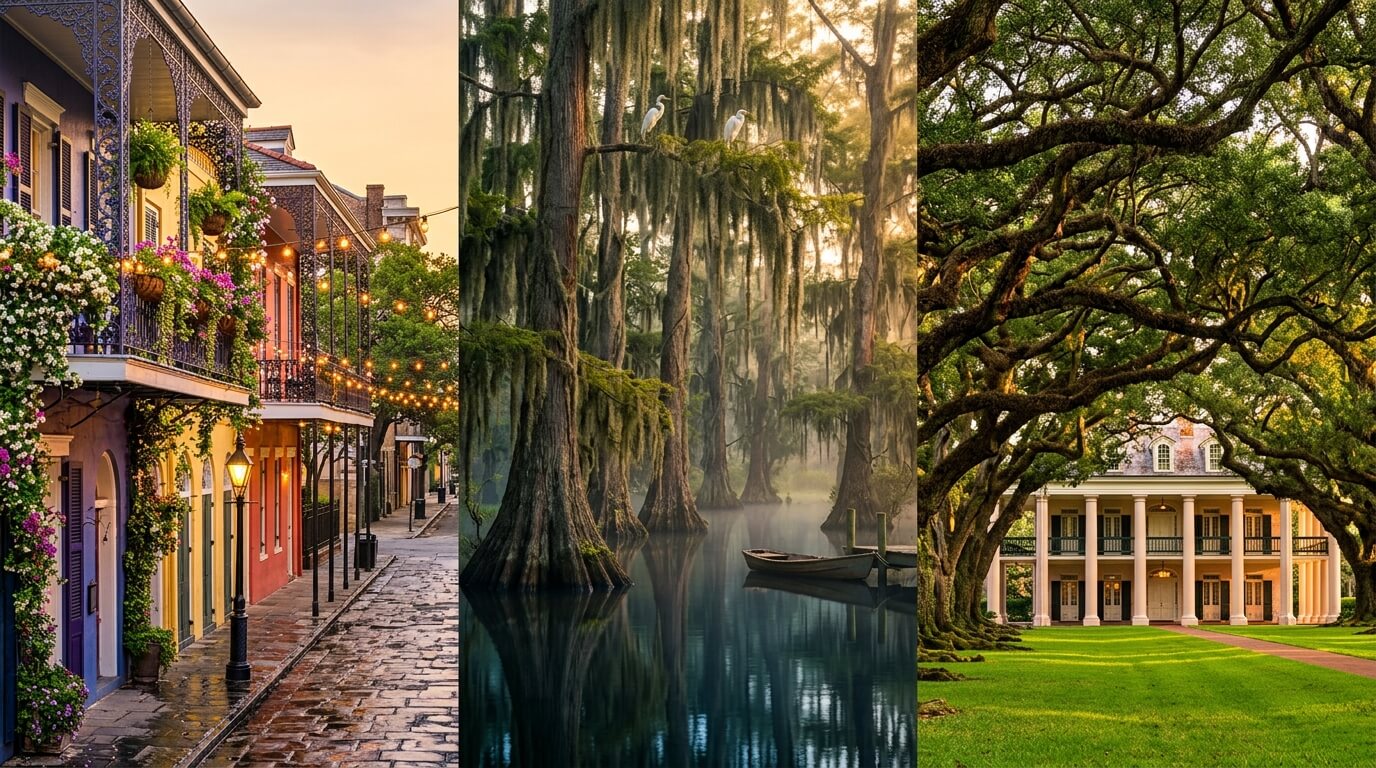
Louisiana operates by its own rules, shaped by French and Spanish colonial rule, deep Caribbean and African influence, and a relationship with water that defines everything from its cuisine to its geography. From the jazz clubs and cemeteries of New Orleans to the antebellum plantations along the Mississippi River, the cypress swamps south of the city, and the Cajun culture of Lafayette, Louisiana rewards travelers looking for something genuinely different from the rest of the country. Whether you are searching for the best tours in Louisiana, tickets to top Louisiana attractions, the best places to visit in Louisiana, or simply the most memorable things to do in Louisiana, this guide covers everything worth knowing before you go.
Top Attractions, Tours and Tickets in Louisiana
New Orleans, the French Quarter, and Steamboat Cruises
The French Quarter remains the historic core of New Orleans, its wrought-iron balconies, jazz clubs, and Creole and Spanish colonial architecture largely unchanged since the 18th and 19th centuries despite the city's reputation as a modern party destination. The Steamboat Natchez, the city's only surviving authentic steamboat, departs from the riverfront behind Jax Brewery for Mississippi River cruises, often with a live jazz band aboard, giving visitors a view of the city skyline that most tourists never see from downtown. Combined city and steamboat jazz cruise tours pair a guided overview of the French Quarter and Garden District with time on the water, and Jackson Square, anchored by St. Louis Cathedral, remains the natural starting point for exploring the Quarter on foot.
Book a New Orleans City & Steamboat Tour →Plantation Tours Along River Road
The stretch of the Mississippi River between New Orleans and Baton Rouge, known as River Road, holds several of the best-preserved antebellum plantation sites in the South, each taking a different approach to interpreting that history. Oak Alley, famous for its quarter-mile canopy of 300-year-old live oaks leading to the main house, focuses on architecture and grounds, while Whitney Plantation, which opened in 2014, is the only plantation museum in Louisiana dedicated entirely to the history of American slavery, told primarily through the accounts of enslaved people themselves. Half-day tours to Oak Alley with transportation from New Orleans are the most common way to visit, and combination tours pairing Oak Alley or Whitney with an afternoon swamp tour are widely available for visitors who want both experiences in a single day.
Book an Oak Alley Plantation Tour →Swamp and Bayou Airboat Tours
The cypress swamps and bayous surrounding New Orleans, particularly in the Barataria Basin south of the city, offer some of the most accessible wetland wildlife viewing in the country, with American alligators, bald eagles, and wild boar all regularly spotted from the water. Airboats, flat-bottomed vessels powered by an aircraft-style propeller, can skim across water only inches deep, reaching parts of the swamp that a standard motorboat never could. Guided airboat swamp tours typically run from small departure points south of the city, with hotel pickup included, and most captains have spent years working the same stretch of bayou, which shows in how reliably they can spot wildlife that visitors would otherwise miss entirely.
Book a New Orleans Airboat Swamp Tour →Cemeteries and the Garden District
New Orleans' historic cemeteries are famous for their above-ground tombs, a practical response to the city's high water table that has produced some of the most visually distinctive burial grounds in the country. St. Louis Cemetery No. 1, the oldest surviving cemetery in the city, holds the reputed tomb of voodoo practitioner Marie Laveau, though access is now restricted to guided tours only following past vandalism concerns. The adjoining Garden District, laid out by wealthy American merchants in the 19th century as a deliberate architectural counterpoint to the French Quarter's Creole style, remains one of the best-preserved collections of antebellum mansions in the South. Combined city, cemetery, and Garden District tours cover both neighborhoods with a single local guide.
Book a Cemetery & Garden District Tour →Cajun Country and Lafayette
Lafayette anchors Acadiana, the region settled by French-speaking Acadian exiles deported from Canada by the British in the 1750s, and their descendants' culture, food, and zydeco and Cajun music remain distinct from the Creole traditions of New Orleans further east. St. John's Cathedral and its 500-year-old live oak, along with St. John Cemetery's above-ground tombs and local Rougarou folklore, anchor a downtown walking route through the city's Cajun history. Guided Cajun history and folklore walking tours cover that history alongside stops at local restaurants and the Acadiana Center for the Arts, and nearby Breaux Bridge, self-declared the Crawfish Capital of the World, is worth the short drive during crawfish season each spring.
Book a Lafayette Cajun History Walking Tour →Baton Rouge and the State Capitol
Baton Rouge's State Capitol, completed in 1932 under the direction of Governor Huey Long, stands 34 stories tall, making it the tallest state capitol building in the country, with an observation deck offering views across the city and the Mississippi River. Long himself was assassinated in the building's halls in 1935, and bullet holes reportedly still mark the site of the shooting, adding a genuinely dark chapter to a tour of the building. LSU's campus, with its Italian Renaissance-influenced architecture and Mike the Tiger's on-campus habitat, anchors the city's other major draw, particularly on football Saturdays when Tiger Stadium becomes one of the loudest venues in college sports.
Mardi Gras and Louisiana Festivals
Mardi Gras in New Orleans has grown from a Catholic pre-Lenten tradition into the city's single biggest annual event, with elaborate krewe parades, hand-thrown beads and trinkets, and costumed crowds filling the streets for roughly two weeks leading up to Fat Tuesday each year. Smaller, more community-focused Mardi Gras celebrations in towns like Lafayette and the Cajun countryside, including the rural Courir de Mardi Gras chicken chase tradition, offer a very different, less commercialized version of the holiday than the French Quarter's Bourbon Street scene. Beyond Mardi Gras, the state's calendar of food and music festivals, including the New Orleans Jazz and Heritage Festival each spring, draws visitors specifically timing their trips around a single event.
Major Cities and Places to Visit in Louisiana
- New Orleans Tours & Tickets - The French Quarter, jazz clubs, above-ground cemeteries, and some of the best food in the country
- Lafayette Tours & Tickets - The heart of Cajun Country, with zydeco music, crawfish boils, and Acadian folklore
- Baton Rouge Tours & Tickets - The state capital, home to LSU and the tallest state capitol building in the country
- Vacherie Tours & Tickets - The heart of River Road plantation country, home to Oak Alley and Laura Plantations
- Natchitoches Tours & Tickets - Louisiana's oldest permanent settlement, with a brick-paved historic riverfront district
- Shreveport Tours & Tickets - A northern Louisiana river city with a growing casino and film production industry
- Breaux Bridge Tours & Tickets - The self-declared Crawfish Capital of the World, in the heart of Cajun Country
- Houma Tours & Tickets - A bayou country hub city surrounded by wetlands, swamp tours, and shrimping communities
- Lake Charles Tours & Tickets - A southwest Louisiana casino and outdoor recreation hub near the Creole Nature Trail
- St. Francisville Tours & Tickets - A quiet plantation-country town overlooking the Mississippi River bluffs
Universities, Colleges and Sports Teams in Louisiana
- Louisiana State University in Baton Rouge - The state's flagship public university, with one of the loudest and most storied home football environments in the country.
- LSU Tigers (sports team) in Baton Rouge - NCAA Division I program competing in the Southeastern Conference, with a passionately followed football and baseball tradition.
- Tulane University in New Orleans - A private research university in New Orleans known for public health, law, and business programs.
- Tulane Green Wave (sports team) in New Orleans - NCAA Division I program competing in the American Athletic Conference.
Louisiana Demographics and Population
According to the 2024 American Community Survey, Louisiana has a population of approximately 4,611,961 people across 43,213 square miles, ranking it 25th among U.S. states by population. The median household income is $60,756, and the largest racial and ethnic groups are Asian (1.7%), White (58%), Hispanic (7%), and Black or African American (31.1%). The median age is 38.0 years. Approximately 18.7% of residents live below the poverty line, compared to the national rate of 12.2%. Louisiana's economy is anchored by oil and gas production and petrochemical refining along the Mississippi River corridor, one of the largest port systems in the country, a major film and television production industry drawn by tax incentives, and a tourism sector built heavily around New Orleans, Mardi Gras, and Cajun and Creole culture.
When to Visit Louisiana
Winter (December through February) is the best time to visit Louisiana. The best time to visit Louisiana for most travelers. Temperatures are mild, humidity drops from summer highs, and Mardi Gras season brings the state's biggest annual celebrations in February or March. Spring (March through May): Warm and increasingly popular, with crawfish season in full swing and the New Orleans Jazz and Heritage Festival held every April. Fall (September through November): A comfortable shoulder season once the worst of summer heat and hurricane risk passes, with noticeably fewer crowds than winter or spring. Summer (June through August): Hot, humid, and the peak of hurricane season, generally the least popular time to visit, though prices drop accordingly.
Frequently Asked Questions About Touring Louisiana
Official Louisiana Resources
The following official government websites provide additional planning resources, park information, and historical records for travelers visiting Louisiana.
| Resource | Description | Website |
|---|---|---|
| State of Louisiana | Official state government portal with links to all state agencies and services | www.louisiana.gov |
| Louisiana Travel | Official state tourism website with travel guides and trip planning tools | www.louisianatravel.com |
| Louisiana Department of Wildlife and Fisheries | State agency covering fishing and hunting regulations, licenses, and state wildlife areas | www.wlf.louisiana.gov |
| Jean Lafitte National Historical Park and Preserve | Official National Park Service site covering the Barataria Preserve swamplands and New Orleans history | www.nps.gov/jela |
| Whitney Plantation | Official site for the Whitney Plantation museum, dedicated to the history of slavery in Louisiana | www.whitneyplantation.org |
| Oak Alley Plantation | Official site for Oak Alley Plantation along River Road | www.oakalleyplantation.org |
| Louisiana State Archives | State agency preserving historical government records, part of the Secretary of State's office | www.sos.la.gov/HistoricalResources |
| Louisiana Census Data | Official U.S. Census Bureau QuickFacts for Louisiana population and demographic statistics | www.census.gov/quickfacts/LA |