Last updated August 16, 2026
The Best Tours & Places to Visit in Mississippi
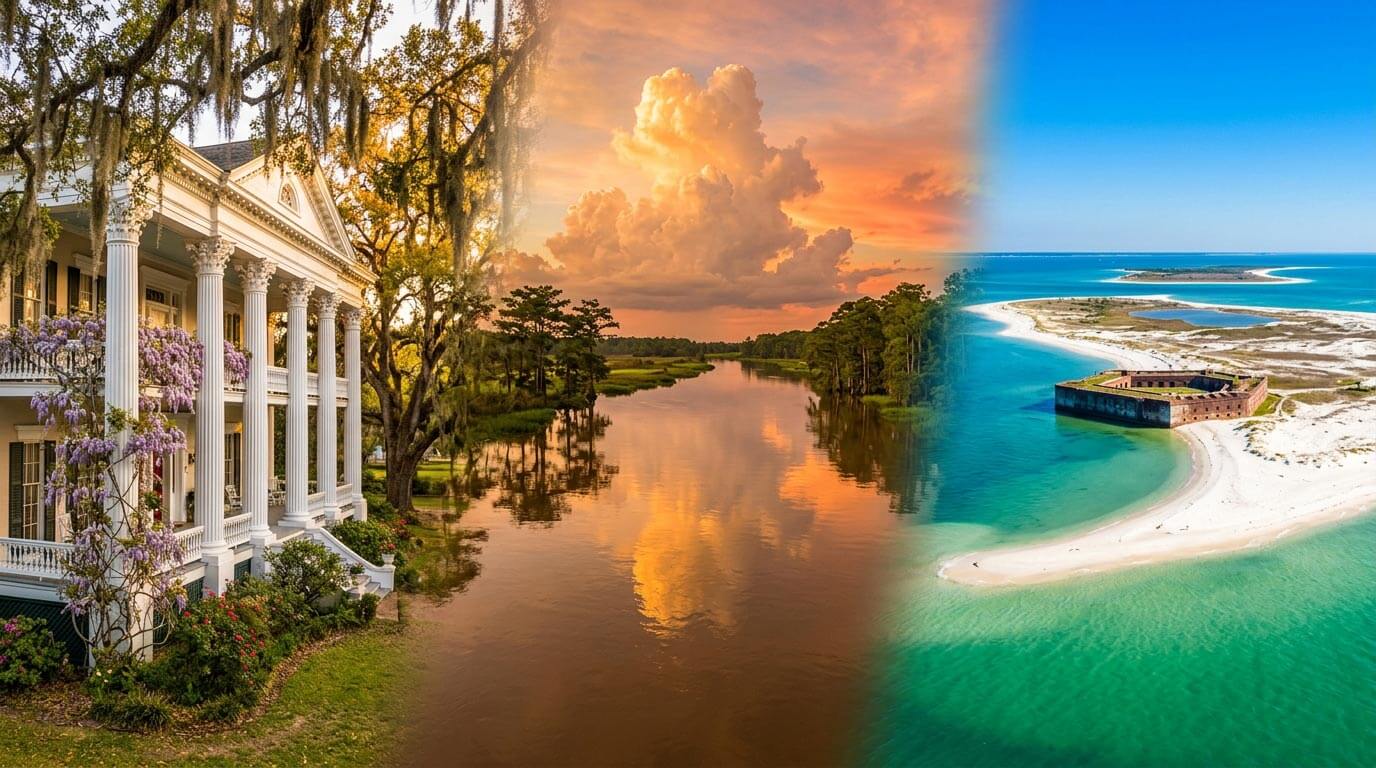
Mississippi carries an outsized cultural weight for its size, having produced the blues, rock and roll, and a disproportionate share of America's greatest writers, all against a backdrop of antebellum mansions, Civil War battlefields, and a stretch of Gulf Coast beach. From the historic bluff-top mansions of Natchez to the Civil War siege grounds of Vicksburg, the blues clubs of the Mississippi Delta, and the casino resorts along the Gulf Coast, Mississippi rewards travelers willing to dig past a complicated history for genuinely singular culture. Whether you are searching for the best tours in Mississippi, tickets to top Mississippi attractions, the best places to visit in Mississippi, or simply the most memorable things to do in Mississippi, this guide covers everything worth knowing before you go.
Top Attractions, Tours and Tickets in Mississippi
Natchez and Antebellum Mansions
Natchez holds the largest concentration of antebellum mansions anywhere in the South, a legacy of the immense wealth generated by cotton plantations and the enslaved labor that made them profitable before the Civil War. Longwood, the largest octagonal house in the country, remains unfinished inside after construction stopped abruptly at the outbreak of the war, while Stanton Hall represents one of the most completely restored and furnished mansions open to the public. Guided historical building tours cover both the architecture of these homes and the fuller history behind them, including the African American and river trade history that the plantation narrative alone leaves out, and the bluffs overlooking the Mississippi River add some of the best river views in the state.
Book a Natchez Historical Buildings Tour →Vicksburg and Civil War History
The 1863 Siege of Vicksburg, ending in a Union victory that split the Confederacy in two and gave the North control of the entire Mississippi River, ranks among the most strategically important campaigns of the Civil War. Vicksburg National Military Park preserves more than 1,300 monuments and markers across the battlefield, along with the USS Cairo, a raised and restored Union ironclad gunboat, and a national cemetery holding the graves of over 17,000 Union soldiers. The park's 16-mile driving tour, with numbered stops corresponding to key positions during the 47-day siege, remains the most complete way to understand how the campaign unfolded, and Vicksburg's compact downtown adds antebellum architecture that survived the siege largely intact.
The Mississippi Delta and the Blues
The Mississippi Delta, the flat, fertile floodplain between the Mississippi and Yazoo Rivers, gave rise to the blues in the early 20th century, born from the work songs and field hollers of Black sharecroppers and later carried north to Chicago and beyond by musicians who left the region during the Great Migration. Clarksdale, at the legendary crossroads of Highways 61 and 49, remains the spiritual center of Delta blues tourism, with juke joints, the Delta Blues Museum, and the annual Juke Joint Festival drawing music pilgrims from around the world. The Gateway to the Blues Museum in Tunica, housed in a restored 1895 train depot, covers the genre's origins along Highway 61, sometimes called the Blues Highway, for travelers approaching the Delta from the north.
Book Gateway to the Blues Museum Tickets →The Gulf Coast and Biloxi
Mississippi's Gulf Coast stretches 26 miles of white sand beach across Biloxi, Gulfport, and the surrounding barrier islands, rebuilt substantially since Hurricane Katrina devastated the region in 2005 and now anchored by a string of large casino resorts. Biloxi's casinos offer the region's main nightlife and entertainment draw, while the Institute for Marine Mammal Studies and the Maritime and Seafood Industry Museum document the coast's deeper history as a fishing and shrimping community. Ship Island, reachable by ferry from Gulfport, adds a quieter barrier island beach experience within Gulf Islands National Seashore, well removed from the casino strip on the mainland.
Jackson and the State Capital
Jackson, Mississippi's capital and largest city, holds the Mississippi Civil Rights Museum, one of the most comprehensive Civil Rights museums in the country, tracing the movement's history in the state from slavery through the assassination of Medgar Evers, who lived and worked in Jackson. The Mississippi State Capitol, completed in 1903 in the Beaux-Arts style, remains the third capitol building to serve the state and is open for self-guided and docent-led tours. The Mississippi Museum of Art and the Two Mississippi Museums complex, which pairs the Civil Rights Museum with the Museum of Mississippi History, give the city a denser concentration of serious museums than its size might suggest.
Oxford and Ole Miss
Oxford centers on the University of Mississippi, universally known as Ole Miss, whose tree-lined Grove becomes one of the most elaborate tailgating scenes in college football on home game Saturdays each fall. William Faulkner lived most of his life in Oxford, and Rowan Oak, his antebellum home turned museum, remains preserved largely as he left it, offering a rare look at the working environment of a Nobel Prize-winning writer. The town square, anchored by the Lafayette County Courthouse and Square Books, one of the most respected independent bookstores in the South, has made Oxford a genuine literary destination well beyond its connection to Faulkner alone.
The Natchez Trace Parkway
The Natchez Trace Parkway follows a travel corridor used for thousands of years, first by Native American nations and later by boatmen walking home after floating goods down the Mississippi River, before the National Park Service turned it into a 444-mile scenic parkway free of commercial traffic and billboards. The route runs from Natchez through Jackson and Tupelo before ending near Nashville, Tennessee, passing prehistoric Native American mounds, sections of the original sunken trail worn by centuries of foot traffic, and Civil War sites along the way. The parkway's consistent speed limit and lack of commercial development make it one of the more meditative long drives in the South, particularly appealing for travelers with time to take the scenic route between Mississippi and Tennessee rather than the interstate.
Major Cities and Places to Visit in Mississippi
- Natchez Tours & Tickets - The highest concentration of antebellum mansions in the South, overlooking the Mississippi River
- Vicksburg Tours & Tickets - Site of the pivotal 1863 Civil War siege, preserved at Vicksburg National Military Park
- Jackson Tours & Tickets - Mississippi's state capital, with the Mississippi Civil Rights Museum and a Beaux-Arts capitol building
- Oxford Tours & Tickets - Home to the University of Mississippi and the longtime residence of author William Faulkner
- Clarksdale Tours & Tickets - Widely considered the birthplace of the blues, at the legendary Crossroads of Highways 61 and 49
- Tunica Tours & Tickets - A Mississippi River casino resort town and home to the Gateway to the Blues Museum
- Biloxi Tours & Tickets - A Gulf Coast casino resort city with 26 miles of white sand beach
- Gulfport Tours & Tickets - A Gulf Coast city with beaches, fishing charters, and a growing arts scene
- Tupelo Tours & Tickets - The birthplace of Elvis Presley, with his preserved childhood home open to visitors
- Hattiesburg Tours & Tickets - Home to the University of Southern Mississippi and a walkable historic downtown
Universities, Colleges and Sports Teams in Mississippi
- University of Mississippi in Oxford - Universally known as Ole Miss, with one of the most elaborate tailgating traditions in college football.
- Ole Miss Rebels (sports team) in Oxford - NCAA Division I program competing in the Southeastern Conference.
- Mississippi State University - The state's land-grant university, based in Starkville.
- Mississippi State Bulldogs (sports team) - NCAA Division I program competing in the Southeastern Conference.
Mississippi Demographics and Population
According to the 2024 American Community Survey, Mississippi has a population of approximately 2,946,779 people across 46,925 square miles, ranking it 35th among U.S. states by population. The median household income is $56,447, and the largest racial and ethnic groups are Asian (1%), White (55.2%), Hispanic (3.7%), and Black or African American (36.3%). The median age is 39.0 years. Approximately 18.8% of residents live below the poverty line, compared to the national rate of 12.2%. Mississippi's economy is anchored by agriculture, particularly poultry, soybeans, and catfish farming, casino gaming and tourism along the Gulf Coast, furniture manufacturing, and a healthcare sector centered on the University of Mississippi Medical Center in Jackson.
When to Visit Mississippi
Fall (September through November) is the best time to visit Mississippi. The best time to visit Mississippi. Humidity drops after a hot Deep South summer, temperatures are comfortable for touring Natchez and Vicksburg, and Ole Miss football season fills Oxford's Grove every home Saturday. Spring (March through May): A close second to fall, with mild temperatures and the Natchez Spring Pilgrimage, when many of the city's private antebellum homes open for tours not available the rest of the year. Summer (June through August): Hot and humid statewide, though the Gulf Coast beaches around Biloxi and Gulfport stay busy with visitors escaping the inland heat. Winter (December through February): Mild by national standards, and the quietest season for the Delta and Natchez, though Gulf Coast casinos and indoor museums stay busy year-round.
Frequently Asked Questions About Touring Mississippi
Official Mississippi Resources
The following official government websites provide additional planning resources, park information, and historical records for travelers visiting Mississippi.
| Resource | Description | Website |
|---|---|---|
| State of Mississippi | Official state government portal with links to all state agencies and services | www.ms.gov |
| Visit Mississippi | Official state tourism website with travel guides and trip planning tools | visitmississippi.org |
| Mississippi Department of Wildlife, Fisheries, and Parks | State agency overseeing Mississippi state parks and fishing and hunting regulations | www.mdwfp.com |
| Vicksburg National Military Park | Official National Park Service site for the Vicksburg battlefield | www.nps.gov/vick |
| Natchez Trace Parkway | Official National Park Service site for the Natchez Trace Parkway | www.nps.gov/natr |
| Mississippi Civil Rights Museum | Official site for the Civil Rights museum in Jackson | mcrm.mdah.ms.gov |
| Mississippi Department of Archives and History | State agency preserving historical government records, the second-oldest such department in the country | www.mdah.ms.gov |
| Mississippi Census Data | Official U.S. Census Bureau QuickFacts for Mississippi population and demographic statistics | www.census.gov/quickfacts/MS |