Last updated August 17, 2026
The Best Tours & Places to Visit in North Dakota
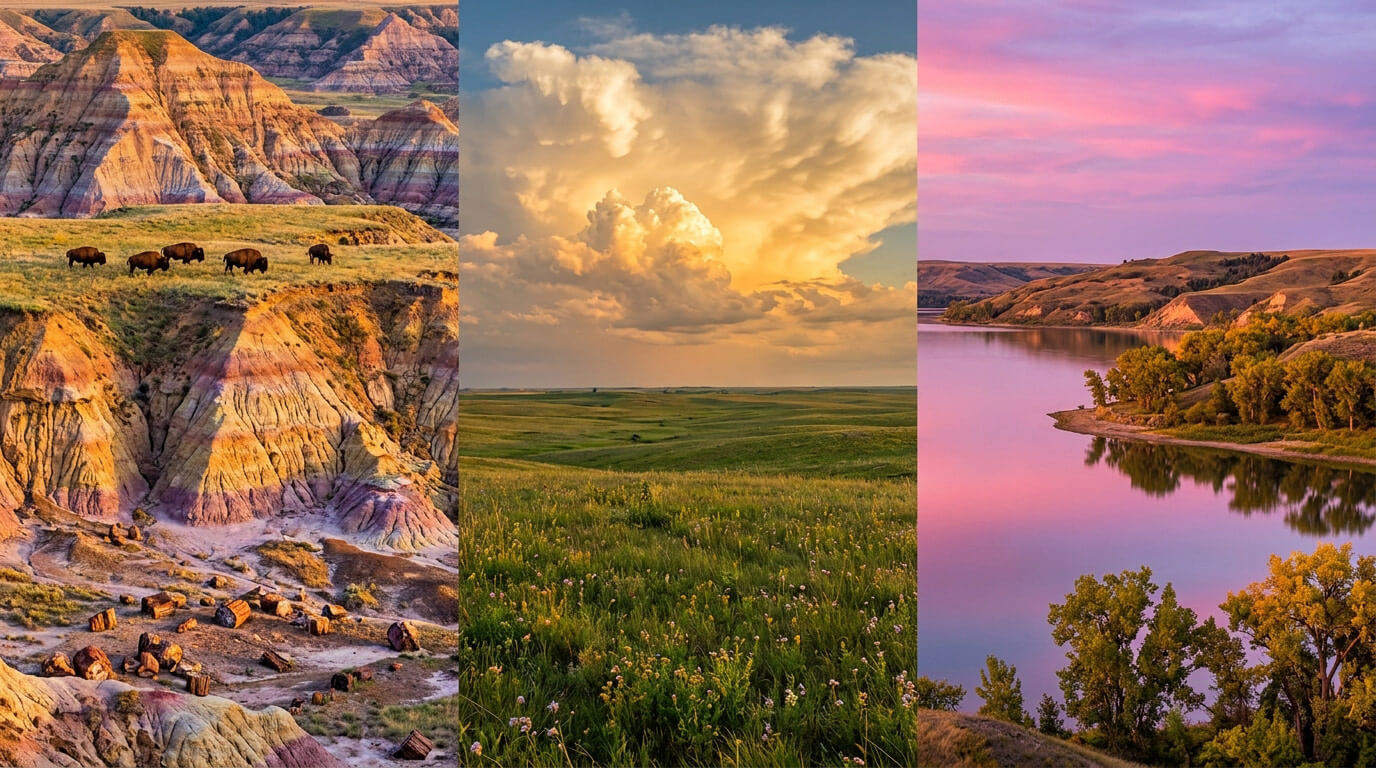
North Dakota centers on wide-open prairie and the badlands of the Little Missouri River, where Theodore Roosevelt once ranched and which now anchors both Theodore Roosevelt National Park and the newly opened Theodore Roosevelt Presidential Library in Medora. Fargo and Bismarck give the state its two largest cities, while the Bakken oil boom in the west has reshaped much of North Dakota's rural economy over the past two decades. It remains one of the least-visited states in the country, which for travelers willing to make the drive means uncrowded national park trails and small towns that have not been reshaped around tourism.
Top Attractions, Tours and Tickets in North Dakota
Theodore Roosevelt National Park & the Badlands
Theodore Roosevelt National Park protects more than 70,000 acres of North Dakota Badlands along the Little Missouri River, split into a North Unit and a South Unit connected by the small town of Medora. The park's colorful eroded buttes, free-roaming bison herds, and wild horse herds in the South Unit reflect the same landscape that drew a young Theodore Roosevelt to ranch here in the 1880s, an experience he later credited with shaping his conservation policies as president. The Painted Canyon Visitor Center, just off Interstate 94, offers one of the most accessible badlands overlooks in the park without a long hike required.
Medora & the Theodore Roosevelt Presidential Library
Medora is a town of fewer than 200 year-round residents that swells with visitors every summer for the Medora Musical, an outdoor variety show staged at the Burning Hills Amphitheater against a Badlands backdrop. The town's biggest recent addition is the Theodore Roosevelt Presidential Library, which opened in 2025 as the country's newest presidential library, tracing Roosevelt's path from a young New Yorker to Badlands rancher, Rough Rider, and president through immersive galleries and a rooftop terrace overlooking the surrounding buttes. Medora Riding Stables offers guided trail rides into the Badlands terrain just outside town for visitors who want to see the landscape the way Roosevelt originally did.
Fargo & the Red River Valley
Fargo anchors the flat, fertile Red River Valley on North Dakota's eastern border with Minnesota, and its downtown has grown around the restored 1926 Fargo Theatre, still showing films beneath its original marquee. The Plains Art Museum and the quirky Fargo-Moorhead Visitor Center, home to a wood chipper prop from the Coen brothers' film Fargo, round out a walk through downtown. Just outside the city, the Bonanzaville pioneer village recreates 19th-century Red River Valley farm life across more than 40 historic buildings.
Bismarck & the Missouri River
Bismarck sits on the Missouri River across from its twin city of Mandan, and its 19-story Art Deco State Capitol, the tallest building in North Dakota, offers free tours and an observation deck over the surrounding prairie. Nearby Fort Abraham Lincoln State Park preserves George Armstrong Custer's reconstructed home and a reconstructed Mandan earthlodge village, tying the area to both frontier military history and centuries of Native American settlement along the river. A sunset cruise on the Missouri River is one of the more relaxed ways to see the city from the water.
The International Peace Garden & Northern Prairie
The International Peace Garden straddles the U.S.-Canada border at the edge of North Dakota's Turtle Mountains, planted in 1932 as a living symbol of the peaceful relationship between the two countries and now home to more than 150,000 flowers, a 9/11 memorial built from World Trade Center steel, and a peace chapel with inscriptions from world leaders. The surrounding Turtle Mountains offer a wooded, hilly landscape unlike the flat prairie found through most of the rest of the state, with the J. Clark Salyer National Wildlife Refuge nearby drawing birdwatchers during migration season.
Native American Heritage
North Dakota is home to five federally recognized tribal nations, including the Standing Rock Sioux, Turtle Mountain Band of Chippewa, and the Mandan, Hidatsa, and Arikara Nation on the Fort Berthold Reservation. The Knife River Indian Villages National Historic Site, near the town of Stanton, preserves the site of a Hidatsa village that Lewis and Clark visited and wintered near in 1804-1805, with reconstructed earthlodges and a visitor center covering centuries of village life along the Missouri River well before European contact.
State Parks & the Great Plains
Lake Sakakawea, formed by the Garrison Dam on the Missouri River, is the third-largest man-made reservoir in the country and a major destination for boating, walleye fishing, and camping across its more than 1,300 miles of shoreline. Elsewhere on the plains, Lake Metigoshe and Fort Ransom State Parks each offer a quieter, more wooded contrast to the open prairie that defines most of the state, and Devils Lake, North Dakota's largest natural lake, draws ice anglers from across the region every winter.
Major Cities and Places to Visit in North Dakota
- Fargo Tours & Tickets - North Dakota's largest city, on the Red River across from Minnesota, with a revitalized downtown built around the historic Fargo Theatre.
- Bismarck Tours & Tickets - North Dakota's state capital, on the Missouri River, home to the state's tallest building, the 19-story Art Deco State Capitol.
- Medora Tours & Tickets - A small Badlands town at the edge of Theodore Roosevelt National Park, home to the Medora Musical and the new Theodore Roosevelt Presidential Library.
- Grand Forks Tours & Tickets - A Red River Valley city near the Minnesota border, home to the University of North Dakota and a strong aerospace and agricultural economy.
- Minot Tours & Tickets - A north-central North Dakota city known as "Magic City," home to the North Dakota State Fair and the annual Norsk Hostfest Scandinavian festival.
- Dickinson Tours & Tickets - A western North Dakota city near the Badlands, shaped by the Bakken oil boom and serving as a gateway to Theodore Roosevelt National Park's South Unit.
- Williston Tours & Tickets - The hub of North Dakota's Bakken oil patch, near the confluence of the Missouri and Yellowstone Rivers.
- Devils Lake Tours & Tickets - A northeastern North Dakota city on the state's largest natural lake, known for walleye fishing and winter ice fishing.
Universities, Colleges and Sports Teams in North Dakota
- North Dakota State University in Fargo - A public land-grant research university in Fargo, home of the NDSU Bison, whose football program has won multiple FCS national championships.
- University of North Dakota in Grand Forks - The state's flagship public research university in Grand Forks, known for its aerospace program and NCAA Division I hockey team.
North Dakota Demographics and Population
According to the 2024 American Community Survey, North Dakota has a population of approximately 796,568 people across 68,994 square miles, ranking it 47th among U.S. states by population. The median household income is $76,657, and the largest racial and ethnic groups are Asian (1.7%), White (81.7%), Hispanic Latino (4.3%), American Indian and Alaska Native (4.8%), and Black or African American (3.4%). The median age is 36.7 years, and the per capita income is $45,281. Approximately 11.1% of residents live below the poverty line, compared to the national rate of 12.5%. North Dakota has 349,705 households and a mean commute time of 17.5 minutes. North Dakota's economy is built on wheat, soybean, and cattle agriculture across its plains, alongside the Bakken oil and natural gas boom in the western part of the state, which has made North Dakota one of the top oil-producing states in the country.
When to Visit North Dakota
Winter (December through February): Long, harsh, and often bitterly cold, with blizzards possible and ice fishing on Devils Lake a popular way to make use of the season. Spring (March through May): A short, muddy transition season, with the Red River around Fargo prone to flooding as winter snowpack melts. Summer (June through August) is the best time to visit North Dakota. Warm and the best season for visiting the Badlands, with the Medora Musical running from early June through early September and long northern-latitude daylight hours. Fall (September through November): Crisp and often underrated, with harvest season across the prairie and noticeably thinner crowds at Theodore Roosevelt National Park.
Frequently Asked Questions About Touring North Dakota
Official North Dakota Resources
The following official government websites provide additional planning resources, park information, and historical records for travelers visiting North Dakota.
| Resource | Description | Website |
|---|---|---|
| North Dakota Tourism | The state's official travel and tourism site with attraction guides, events, and trip planning tools. | www.ndtourism.com/ |
| North Dakota Parks and Recreation | Official listing of state parks and recreation areas, including Lake Sakakawea and Fort Abraham Lincoln. | www.parkrec.nd.gov/ |
| State Historical Society of North Dakota | State agency responsible for historic sites, archives, and museums, including the State Archives for research and genealogy. | www.history.nd.gov/ |
| ND.gov | The official portal for North Dakota state government services and information. | www.nd.gov/ |