Last updated August 17, 2026
The Best Tours & Places to Visit in South Carolina
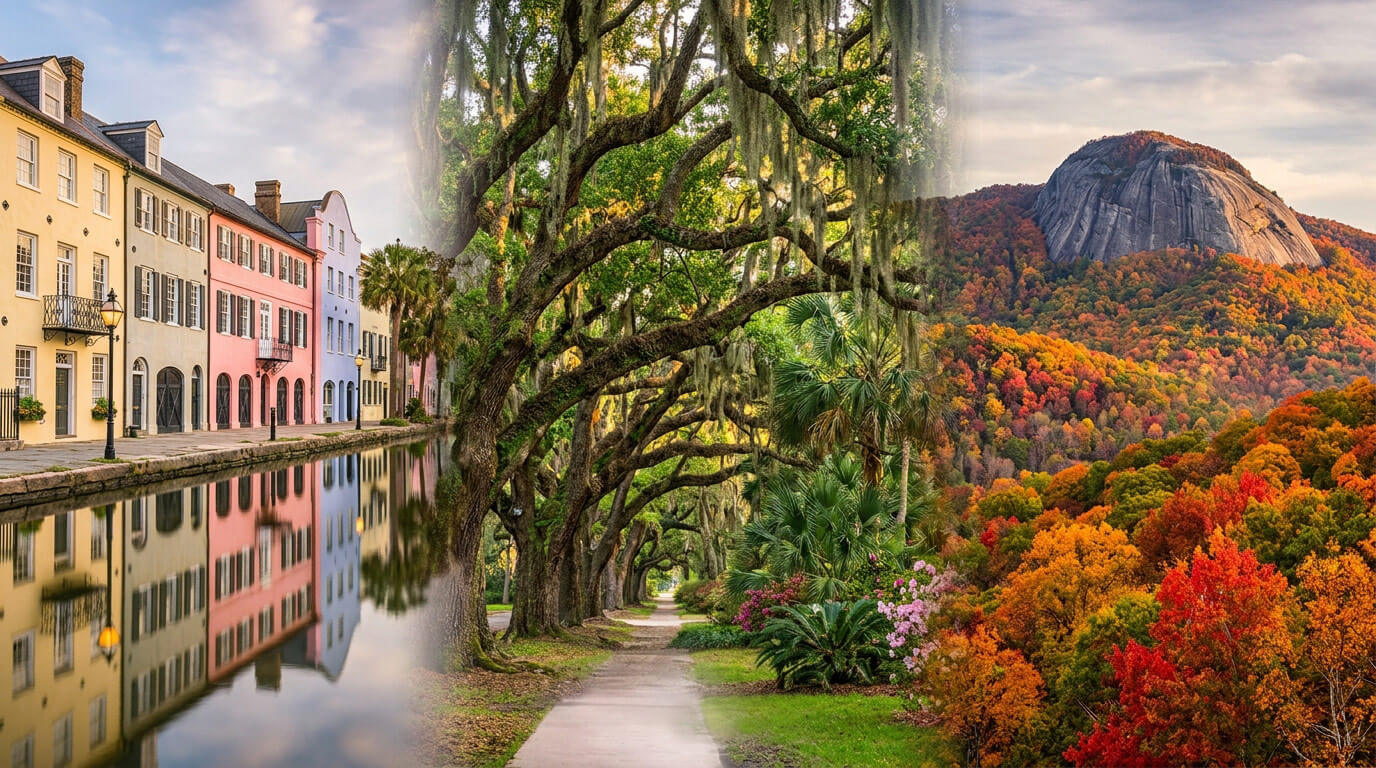
South Carolina pairs one of the best-preserved historic cities in the country with 187 miles of Atlantic coastline, from the family-friendly boardwalk of Myrtle Beach to the quieter golf resorts of Hilton Head Island. Charleston anchors the state's reputation, with cobblestone streets, antebellum architecture, and a food scene that has made it a fixture on best-restaurant-city lists for years, while Fort Sumter, just offshore, marks where the Civil War began in 1861. Inland, Columbia and the Upstate around Greenville add a very different, less-touristed side of the state built around universities, textiles, and the Blue Ridge foothills.
Top Attractions, Tours and Tickets in South Carolina
Charleston's Historic District & Fort Sumter
Charleston's historic district, anchored by the pastel row houses along the Battery and the open-air stalls of the Charleston City Market, is one of the best-preserved 18th- and 19th-century cityscapes in the country. A short ferry ride out into Charleston Harbor reaches Fort Sumter, the Union fort where Confederate artillery fired the opening shots of the Civil War on April 12, 1861, now preserved as a national monument with cannons and exhibits covering the battle and the war that followed. Rainbow Row, a stretch of thirteen brightly colored 18th-century houses along East Bay Street, remains one of the most photographed blocks in the city.
Book Fort Sumter Entry Ticket & Ferry RideLowcountry Plantations
The plantations surrounding Charleston, including Boone Hall, Magnolia Plantation, and Middleton Place, preserve some of the oldest formal gardens in the country alongside a direct, unavoidable reckoning with the economy of slavery that built them. Boone Hall, in operation since 1681, pairs its avenue of 300-year-old oak trees and antique rose garden with the Black History in America exhibit inside nine surviving cabins where enslaved people lived and worked, and a Gullah Theater program presenting oral history and storytelling traditions passed down from the enslaved community. Visiting one of these sites is less a garden tour than a direct look at one of the most consequential parts of American history.
Book Boone Hall Plantation TourMyrtle Beach & the Grand Strand
Myrtle Beach anchors the Grand Strand, a 60-mile run of beach towns along South Carolina's northern coast that has been a family vacation staple since the mid-20th century. The Myrtle Beach Boardwalk and Promenade, along with the SkyWheel Ferris wheel, mini-golf courses on nearly every block, and Broadway at the Beach entertainment complex, give the area a distinctly unpretentious, family-first character compared to the more upscale resorts further south. The Waccamaw River, running just inland of the beach towns, offers a quieter, blackwater alternative for visitors who want to get off the main strip.
Book Blackbeard's Pirate Cruise AdventureHilton Head Island
Hilton Head Island takes a quieter, more upscale approach to the South Carolina coast than the Grand Strand, built around more than two dozen golf courses, protected maritime forest, and 12 miles of public beach along the island's shoe-shaped coastline. Dolphins are a near-guaranteed sighting in Calibogue Sound and the surrounding tidal creeks, and Harbour Town's red-and-white striped lighthouse, overlooking the marina where the RBC Heritage golf tournament has been held since 1969, remains the island's most recognizable landmark. More than 60 miles of paved bike paths connect the island's neighborhoods, making it one of the most bike-friendly resort destinations on the East Coast.
Book Hilton Head Sunset Dolphin CruiseColumbia & the Midlands
Columbia, South Carolina's state capital since 1786, sits at the confluence of the Broad and Saluda Rivers in the state's Midlands region. The domed 1855 State House still carries six bronze stars marking where Union artillery struck the building during General Sherman's 1865 march through the city, and the South Carolina State Museum, housed in a former textile mill, covers the state's natural and cultural history across four floors. Riverbanks Zoo and Garden, consistently ranked among the top zoos in the Southeast, and the University of South Carolina's historic Horseshoe quad round out a walk through the city.
Upstate South Carolina
Greenville, once a textile manufacturing center, has rebuilt its downtown around Falls Park on the Reedy, where a suspended pedestrian bridge crosses directly over a 40-foot waterfall in the middle of the city. The surrounding Upstate region rises into the foothills of the Blue Ridge Mountains, with Table Rock State Park and Caesars Head State Park both offering hiking and mountain views closer to Asheville's scenery than the Lowcountry's marshes. Clemson University, in the far western corner of the Upstate along Lake Hartwell, anchors a college-town economy built almost entirely around its football program.
Gullah Geechee Culture & the Sea Islands
The Sea Islands stretching along South Carolina's coast, including St. Helena Island near Beaufort, are home to the Gullah Geechee people, descendants of enslaved West and Central Africans who developed a distinct language, cuisine, and craft traditions while remaining relatively isolated on the islands for generations. The Penn Center on St. Helena Island, founded in 1862 as one of the first schools for formerly enslaved people in the country, now serves as a museum and cultural center preserving Gullah history, and sweetgrass basket weaving, a craft tracing directly back to West African traditions, is still practiced and sold along Highway 17 north of Charleston. The Gullah Geechee Cultural Heritage Corridor, a federally designated National Heritage Area, now runs along the coast from North Carolina to Florida to help preserve this history.
Major Cities and Places to Visit in South Carolina
- Charleston Tours & Tickets - South Carolina's most historic city, known for its pastel row houses along the Battery, cobblestone streets, and one of the best restaurant scenes in the South.
- Columbia Tours & Tickets - South Carolina's state capital in the Midlands, home to the University of South Carolina and a domed 1855 State House still marked by Civil War-era cannon damage.
- Myrtle Beach Tours & Tickets - The anchor of the 60-mile Grand Strand, South Carolina's most visited beach destination, known for its boardwalk, mini-golf courses, and family attractions.
- Hilton Head Island Tours & Tickets - A low-key barrier island resort town known for its lagoon-shaped golf courses, bike trails, and reliable dolphin sightings in Calibogue Sound.
- Greenville Tours & Tickets - An Upstate South Carolina city at the foothills of the Blue Ridge Mountains, built around a revitalized downtown and Falls Park on the Reedy.
- Beaufort Tours & Tickets - A Lowcountry town on Port Royal Sound known for antebellum architecture and its role as a filming location for movies like Forrest Gump and The Big Chill.
- Mount Pleasant Tours & Tickets - A fast-growing town across the Cooper River from Charleston, home to Patriots Point and the USS Yorktown aircraft carrier museum.
- Spartanburg Tours & Tickets - An Upstate South Carolina city near BMW's only U.S. manufacturing plant, with a walkable downtown built around Wofford and Converse Colleges.
Universities, Colleges and Sports Teams in South Carolina
- University of South Carolina in Columbia - The state's flagship public research university in Columbia, home of the South Carolina Gamecocks.
- Clemson University - A public land-grant research university in the Upstate town of Clemson, home of the Clemson Tigers.
South Carolina Demographics and Population
According to the 2024 American Community Survey, South Carolina has a population of approximately 5,478,831 people across 30,064 square miles, ranking it 23rd among U.S. states by population. The median household income is $69,324, and the largest racial and ethnic groups are Asian (2.1%), White (64.1%), Hispanic Latino (7.9%), American Indian and Alaska Native (0.6%), and Black or African American (25.3%). The median age is 40.7 years, and the per capita income is $40,195. Approximately 13.3% of residents live below the poverty line, compared to the national rate of 12.5%. South Carolina has 2,222,890 households and a mean commute time of 26.3 minutes. South Carolina's economy blends Charleston-area manufacturing, including a major Boeing plant, with tourism along the coast, automotive manufacturing anchored by BMW near Greenville-Spartanburg, and a long agricultural tradition that includes the country's leading peach production outside of California.
When to Visit South Carolina
Winter (December through February): Mild along the coast, with camellias blooming as early as February in Charleston, though the Upstate foothills see occasional snow. Spring (March through May) is the best time to visit South Carolina. Warm and blooming, with azaleas and dogwoods at their peak in Charleston's gardens and comfortable temperatures statewide before summer humidity sets in. Summer (June through August): Hot and humid, the peak season for Myrtle Beach and Hilton Head despite the heat, with afternoon thunderstorms common. Fall (September through November): Warm early on with hurricane season risk along the coast through October, cooling into a pleasant, less crowded stretch by November.
Frequently Asked Questions About Touring South Carolina
Official South Carolina Resources
The following official government websites provide additional planning resources, park information, and historical records for travelers visiting South Carolina.
| Resource | Description | Website |
|---|---|---|
| Discover South Carolina | The state's official travel and tourism site with attraction guides, events, and trip planning tools. | discoversouthcarolina.com/ |
| South Carolina State Parks | Official listing of state parks, including Table Rock and Hunting Island, run by the Department of Parks, Recreation and Tourism. | southcarolinaparks.com/ |
| South Carolina Department of Archives and History | State agency responsible for preserving historical government records and documents for research and genealogy. | scdah.sc.gov/ |
| SC.gov | The official portal for South Carolina state government services and information. | sc.gov/ |