Last updated August 18, 2026
The Best Tours & Places to Visit in Utah
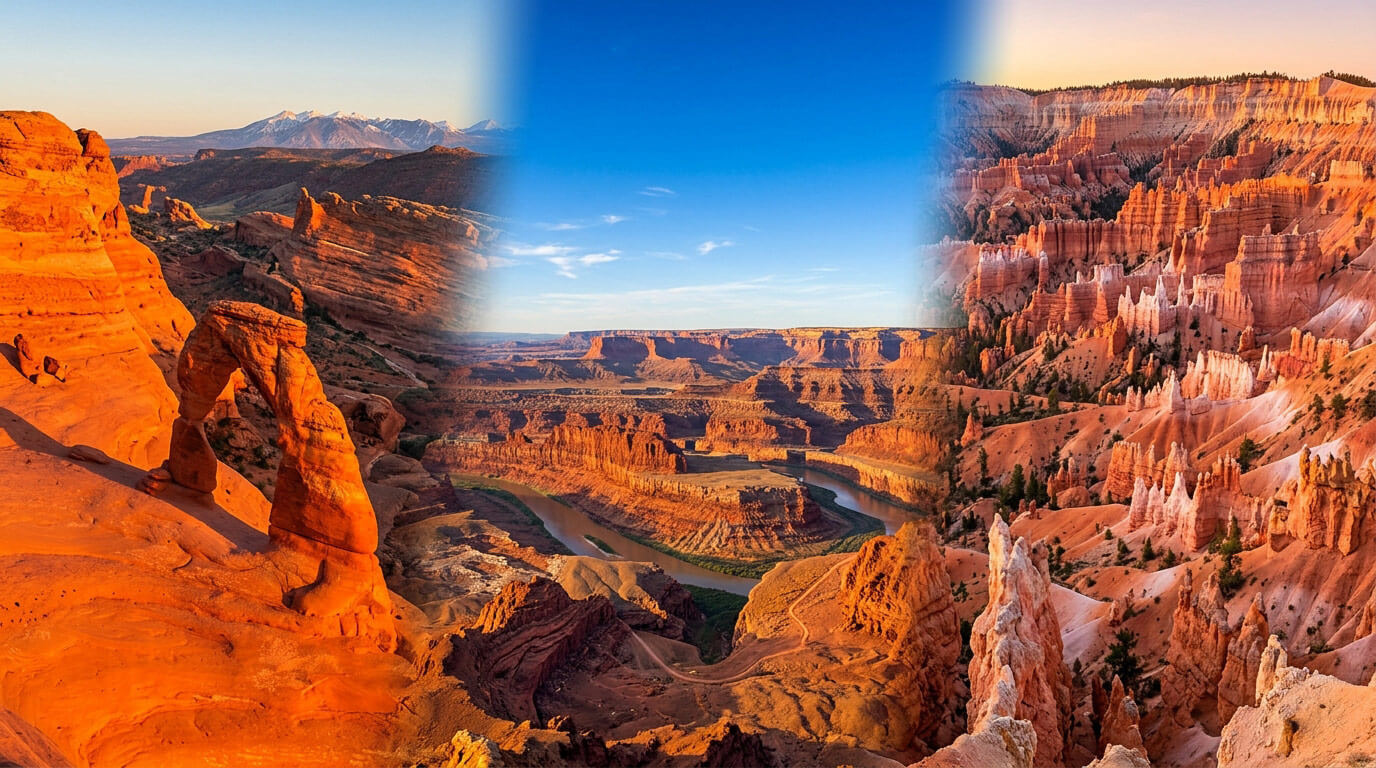
Utah packs five national parks, the "greatest snow on earth," and one of the country's most distinctive religious and pioneer histories into one state. Zion, Bryce Canyon, Capitol Reef, Arches, and Canyonlands, known collectively as the "Mighty 5," give southern Utah some of the most photographed red-rock scenery in the country, while Salt Lake City anchors the north around Temple Square and the headquarters of The Church of Jesus Christ of Latter-day Saints. Park City adds a world-class ski and film festival scene less than an hour from the capital, giving Utah a genuinely different character depending on whether visitors head north or south.
Top Attractions, Tours and Tickets in Utah
Zion National Park
Zion National Park, carved by the Virgin River through Navajo sandstone over millions of years, is Utah's most-visited national park, drawing crowds to hikes like Angels Landing, a chain-assisted climb along a narrow ridge with drop-offs on both sides, and The Narrows, a hike that means wading directly through the river between canyon walls just a few dozen feet apart. A free shuttle system runs the length of Zion Canyon during peak season, since private vehicles are restricted on the main scenic drive most of the year. Springdale, at the park's south entrance, has grown into a full-service gateway town with restaurants and lodging just outside the park boundary.
Book Zion National Park Tour with Free TimeBryce Canyon National Park
Bryce Canyon National Park isn't technically a canyon at all, but a series of natural amphitheaters carved into the edge of the Paunsaugunt Plateau, filled with thousands of hoodoos, thin spires of red and orange rock left behind by frost and rain erosion. Sunrise Point and Sunset Point offer some of the most accessible views in the park, requiring only a short walk from the parking area, while the Navajo Loop and Queen's Garden trails drop hikers directly down among the hoodoos for a completely different perspective. At an elevation over 8,000 feet at its highest points, Bryce Canyon stays noticeably cooler than Zion or Arches through the summer.
Book Bryce Canyon Sightseeing TourArches & Canyonlands National Parks
Moab sits between two national parks that could not look more different up close: Arches, home to more than 2,000 documented natural stone arches including the iconic Delicate Arch, and Canyonlands, a vast, largely undeveloped landscape of canyons and mesas carved by the Colorado and Green Rivers. Moab itself has grown into one of the country's premier off-road destinations, with slickrock trails drawing mountain bikers and Jeep and UTV tours navigating routes like Hell's Revenge along the edge of the canyon rim. A sunset tour through Arches, timed to catch the park's red rock formations glowing at golden hour, is one of the most popular ways to see the park's highlights in a single evening.
Book Arches National Park Sunset TourSalt Lake City & Temple Square
Salt Lake City was founded in 1847 by Brigham Young and a group of Mormon pioneers, and Temple Square, a 10-acre complex downtown, remains the headquarters of The Church of Jesus Christ of Latter-day Saints and one of the most-visited attractions in the state. The square includes the Salt Lake Temple, closed to the public but striking from the outside, along with the domed Tabernacle, home to the famous Tabernacle Choir, and several free museums covering pioneer and church history. Beyond Temple Square, the Utah State Capitol offers mountain views from its steps, and the city's position at the base of the Wasatch Mountains puts world-class skiing less than 45 minutes from downtown.
Book Salt Lake City Sightseeing TourPark City & the Wasatch Mountains
Park City grew out of a 19th-century silver mining boom before reinventing itself first as a ski town and later as the host of the Sundance Film Festival every January, when the town's population swells with filmmakers and celebrities. Park City Mountain and Deer Valley, its two main resorts, sit within Utah's famously light, dry "greatest snow on earth," a marketing phrase that has held up well against most competing ski destinations. The 2002 Winter Olympics left behind facilities still open to visitors today, including a bobsled track at the Utah Olympic Park where the public can ride with a professional driver.
Book Park City & Olympic Heritage ExcursionCapitol Reef & the Mighty 5
Capitol Reef National Park, the least-visited and least-known of Utah's "Mighty 5," protects the Waterpocket Fold, a nearly 100-mile wrinkle in the Earth's crust that exposes millions of years of rock layers in cross-section. The park's Fruita Historic District, settled by Mormon pioneers in the 1880s, still maintains its original orchards, and visitors are welcome to pick and eat fruit directly from the trees during harvest season. Capitol Reef's remote location between the more famous parks means it sees a fraction of Zion or Arches' crowds, making it one of the best options in the state for travelers who want the same red-rock scenery without the lines.
Native American Heritage & Monument Valley
Monument Valley, straddling the Utah-Arizona border within the Navajo Nation, is managed directly by the Navajo people rather than the National Park Service, and its towering sandstone buttes have appeared in countless Western films, most famously several directed by John Ford. Guided tours led by Navajo guides, required to access parts of the valley beyond the main scenic loop, offer a perspective on the land's cultural significance that a self-guided drive cannot. Utah is also home to significant portions of several other tribal nations, including the Ute, Southern Paiute, and Goshute, whose histories and lands predate the state's pioneer settlement by thousands of years.
Major Cities and Places to Visit in Utah
- Salt Lake City Tours & Tickets - Utah's state capital, framed by the Wasatch Mountains and built around Temple Square, the headquarters of The Church of Jesus Christ of Latter-day Saints.
- Park City Tours & Tickets - A former silver mining town turned world-class ski resort, home to the Sundance Film Festival and 2002 Winter Olympics venues.
- Moab Tours & Tickets - A red-rock desert town in southeastern Utah and the gateway to both Arches and Canyonlands National Parks.
- Springdale Tours & Tickets - A small town at the mouth of Zion Canyon, serving as the main gateway to Zion National Park.
- Bryce Canyon City Tours & Tickets - A small town just outside Bryce Canyon National Park, sitting at over 7,000 feet on the edge of the Paunsaugunt Plateau.
- St. George Tours & Tickets - A fast-growing southwestern Utah city near Zion National Park, known for its red sandstone scenery and mild winters.
- Provo Tours & Tickets - A Utah Valley city south of Salt Lake City, home to Brigham Young University and access to the Wasatch Mountains and Utah Lake.
- Ogden Tours & Tickets - A historic railroad city north of Salt Lake City, once known as the crossroads of the West and now a gateway to several nearby ski resorts.
Universities, Colleges and Sports Teams in Utah
- University of Utah in Salt Lake City - The state's flagship public research university in Salt Lake City, home of the Utah Utes.
- Brigham Young University in Provo - A private research university in Provo owned by The Church of Jesus Christ of Latter-day Saints, home of the BYU Cougars.
- Utah Jazz (sports team) in Salt Lake City - NBA franchise playing home games at the Delta Center in downtown Salt Lake City.
- Utah Hockey Club (sports team) in Salt Lake City - NHL franchise that relocated to Salt Lake City in 2024, also playing home games at the Delta Center.
Utah Demographics and Population
According to the 2024 American Community Survey, Utah has a population of approximately 3,503,613 people across 82,144 square miles, ranking it 30th among U.S. states by population. The median household income is $95,166, and the largest racial and ethnic groups are Asian (2.4%), White (80.7%), Hispanic Latino (15.4%), American Indian and Alaska Native (1%), and Black or African American (1.1%). The median age is 32.0 years, and the per capita income is $41,806. Approximately 8.3% of residents live below the poverty line, compared to the national rate of 12.5%. Utah has 1,184,428 households and a mean commute time of 22.1 minutes. Utah has the youngest median age of any U.S. state, and its economy blends a fast-growing tech corridor along the Wasatch Front nicknamed "Silicon Slopes," tourism tied to its five national parks and ski resorts, and a significant financial services sector in Salt Lake City.
When to Visit Utah
Winter (December through February): Cold with heavy, dry powder snow in the Wasatch Mountains, drawing skiers to Park City and the Sundance Film Festival every January. Spring (March through May): Mild with wildflowers in the national parks, a good shoulder season for Zion and Bryce Canyon before summer heat and crowds arrive. Summer (June through August) is the best time to visit Utah. Hot in the southern desert parks but the peak season for Zion, Bryce Canyon, and Arches, with the Wasatch Mountains around Park City offering a cooler alternative. Fall (September through November): Comfortable temperatures and thinner crowds at the national parks, with foliage in the Wasatch and Uinta Mountains.
Frequently Asked Questions About Touring Utah
Official Utah Resources
The following official government websites provide additional planning resources, park information, and historical records for travelers visiting Utah.
| Resource | Description | Website |
|---|---|---|
| Visit Utah | The state's official travel and tourism site with attraction guides, events, and trip planning tools. | www.visitutah.com/ |
| Utah State Parks | Official listing of Utah's 46 state parks, run by the Division of Outdoor Recreation. | stateparks.utah.gov/ |
| Utah Division of Archives and Records Service | State agency responsible for preserving historical government records and documents for research and genealogy. | archives.utah.gov/ |
| Utah.gov | The official portal for Utah state government services and information. | www.utah.gov/ |