Last updated August 18, 2026
The Best Tours & Places to Visit in Vermont
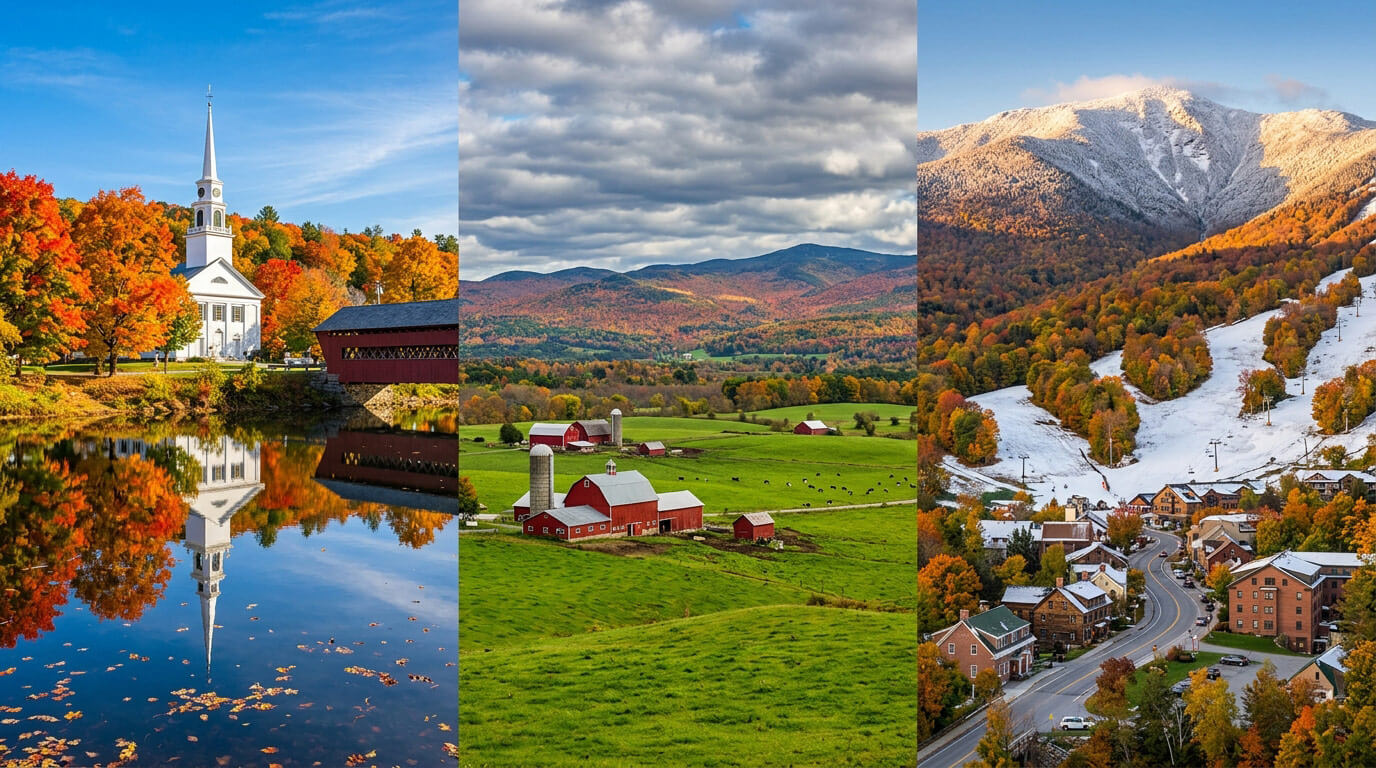
Vermont trades big cities for small towns, covered bridges, and some of the most reliable fall foliage in the country, with a population smaller than many single cities elsewhere in New England. Stowe and Killington anchor the state's ski culture around the Green Mountains, Burlington gives Vermont its only real city on the shore of Lake Champlain, and Ben & Jerry's factory in Waterbury has turned ice cream into one of the state's bigger tourist draws. With no billboards allowed anywhere in the state and a deep-rooted maple syrup and dairy farming tradition, Vermont keeps a genuinely rural character that most nearby states lost decades ago.
Top Attractions, Tours and Tickets in Vermont
Stowe & the Green Mountains
Stowe sits at the base of Mount Mansfield, Vermont's tallest peak at 4,395 feet, and has built its reputation as one of the classic New England ski towns since the 1930s. The Stowe Recreation Path, a paved trail running along the West Branch River, connects the village to the mountain and stays popular well past ski season for biking and walking, and the Trapp Family Lodge, built by the real family behind The Sound of Music, adds an Austrian-inflected touch to the town's architecture. Vermont's craft beer scene has grown into one of the most respected in the country, and Stowe's breweries are as much a draw now as the skiing.
Book Stowe Half-Day Brewery TourBurlington & Lake Champlain
Burlington, Vermont's largest city by a wide margin despite a population under 45,000, sits directly on Lake Champlain with the Adirondack Mountains visible across the water on a clear day. Church Street Marketplace, a four-block pedestrian strip lined with shops and restaurants, anchors downtown, and the University of Vermont gives the small city a college-town energy well beyond its size. Beneath its picturesque surface, Burlington carries its own local ghost stories and unsolved history, covered on walking tours through the historic downtown after dark.
Book Burlington Ghost TourBen & Jerry's & Vermont's Food Culture
Ben & Jerry's factory in Waterbury, where the ice cream brand has been made since 1985, runs regular tours through the production floor followed by a tasting of whatever flavors happen to be running that day, and a small "Flavor Graveyard" out back memorializes discontinued flavors with mock tombstones. Vermont's food identity extends well beyond ice cream, with a concentration of small dairy farms, farmstead cheesemakers, and craft breweries per capita that few other states can match. The Vermont Cheese Trail links dozens of small producers across the state, many open for tastings and tours similar to a wine trail in other regions.
Fall Foliage & Scenic Byways
Vermont's fall foliage season, typically peaking in late September through mid-October depending on elevation and latitude, draws visitors from across the country to drives like Route 100, which runs the length of the state through the Green Mountains, and the Molly Stark Byway in the south. Smugglers' Notch, a narrow, winding pass between Stowe and Jeffersonville, closes to vehicles over a certain length and offers some of the most dramatic close-up views of the changing leaves anywhere in the state. Vermont's lack of billboards, banned statewide since 1968, keeps these drives free of roadside clutter in a way most other states' scenic routes are not.
Covered Bridges & Small-Town Vermont
Vermont has more covered bridges per square mile than any other state, with more than 100 still standing, many still carrying daily traffic rather than serving purely as photo stops. Woodstock, often cited as one of the prettiest towns in New England, centers on a village green ringed by white church steeples and federal-style architecture largely unchanged for two centuries. Smaller towns like Grafton and Chester carry the same character on a quieter scale, with general stores, town commons, and covered bridges that have made Vermont a template for the idealized small New England town.
Skiing & Winter in Vermont
Killington, nicknamed the "Beast of the East," is the largest ski resort in the eastern United States, spanning six mountain peaks with a ski season that regularly runs from October into the following spring. Stowe Mountain Resort and Sugarbush round out Vermont's best-known ski areas, and together they give the state one of the highest concentrations of ski terrain in New England. Vermont's snow is famously drier and more consistent than the coastal Northeast thanks to the Green Mountains' elevation, which is part of why the state has produced a disproportionate number of U.S. Olympic ski and snowboard athletes.
Vermont's Maple Syrup & Farm Country
Vermont produces more maple syrup than any other U.S. state, and sugaring season, running roughly from late February through April when nighttime freezes and daytime thaws get the sap flowing, remains one of the state's oldest and most distinctly local traditions. Family-run sugarhouses across the state open for tours and tastings during the season, many still boiling sap the traditional way over wood fires. Beyond maple, Vermont's dairy farms, some still operating as they have for generations, define much of the state's rural landscape and supply the milk behind its outsized cheese and creamery industry.
Major Cities and Places to Visit in Vermont
- Burlington Tours & Tickets - Vermont's largest city, set on the shore of Lake Champlain with the Adirondacks visible across the water and a lively pedestrian marketplace on Church Street.
- Montpelier Tours & Tickets - Vermont's state capital and the least populous state capital in the country, with a gold-domed 1859 State House at the center of a small, walkable downtown.
- Stowe Tours & Tickets - A classic Vermont ski town at the base of Mount Mansfield, the state's tallest peak, known for its covered bridges and the Trapp Family Lodge.
- Woodstock Tours & Tickets - A picture-postcard Vermont town of white church steeples and a village green, often cited as one of the prettiest small towns in New England.
- Manchester Tours & Tickets - A southern Vermont town in the shadow of the Green Mountains, known for outlet shopping and access to hiking on the Long Trail.
- Brattleboro Tours & Tickets - A southeastern Vermont town on the Connecticut River, known for its arts scene and monthly Gallery Walk.
- Killington Tours & Tickets - Vermont's largest ski resort, nicknamed the "Beast of the East" for its size and long ski season.
- Middlebury Tours & Tickets - A college town in Vermont's Champlain Valley, home to Middlebury College and access to nearby waterfalls and covered bridges.
Universities, Colleges and Sports Teams in Vermont
- University of Vermont in Burlington - The state's flagship public research university in Burlington, home of the UVM Catamounts.
- Middlebury College in Middlebury - A highly selective private liberal arts college in Middlebury, known for its language immersion programs.
Vermont Demographics and Population
According to the 2024 American Community Survey, Vermont has a population of approximately 642,805 people across 9,216 square miles, ranking it 49th among U.S. states by population. The median household income is $81,203, and the largest racial and ethnic groups are Asian (1.8%), White (89.9%), Hispanic Latino (2.6%), American Indian and Alaska Native (0.5%), and Black or African American (1.1%). The median age is 43.1 years, and the per capita income is $51,085. Approximately 9.0% of residents live below the poverty line, compared to the national rate of 12.5%. Vermont has 285,548 households and a mean commute time of 23.5 minutes. Vermont has no billboards anywhere in the state by law, and its economy blends dairy farming and maple syrup production, tourism tied to skiing and fall foliage, and a nationally recognized food and beverage industry built around brands like Ben & Jerry's and a dense concentration of craft breweries.
When to Visit Vermont
Winter (December through February): Cold and snowy, with ski season running at Killington, Stowe, and Sugarbush from October into spring. Spring (March through May): A muddy transition season known locally as "mud season," followed by maple sugaring from late February through April. Summer (June through August): Mild and green, with farmers markets, Lake Champlain activities around Burlington, and comfortable hiking weather in the Green Mountains. Fall (September through November) is the best time to visit Vermont. Vermont's signature season, with foliage typically peaking from late September through mid-October and drawing the state's biggest crowds of the year.
Frequently Asked Questions About Touring Vermont
Official Vermont Resources
The following official government websites provide additional planning resources, park information, and historical records for travelers visiting Vermont.
| Resource | Description | Website |
|---|---|---|
| Vermont Vacation | The state's official travel and tourism site with attraction guides, events, and trip planning tools. | vermontvacation.com/ |
| Vermont State Parks | Official listing of Vermont's state parks and forests, run by the Department of Forests, Parks and Recreation. | vtstateparks.com/ |
| Vermont State Archives and Records Administration | State agency responsible for preserving historical government records and documents for research and genealogy. | sos.vermont.gov/vsara |
| Vermont.gov | The official portal for Vermont state government services and information. | www.vermont.gov/ |