Last updated August 18, 2026
The Best Tours & Places to Visit in Wyoming
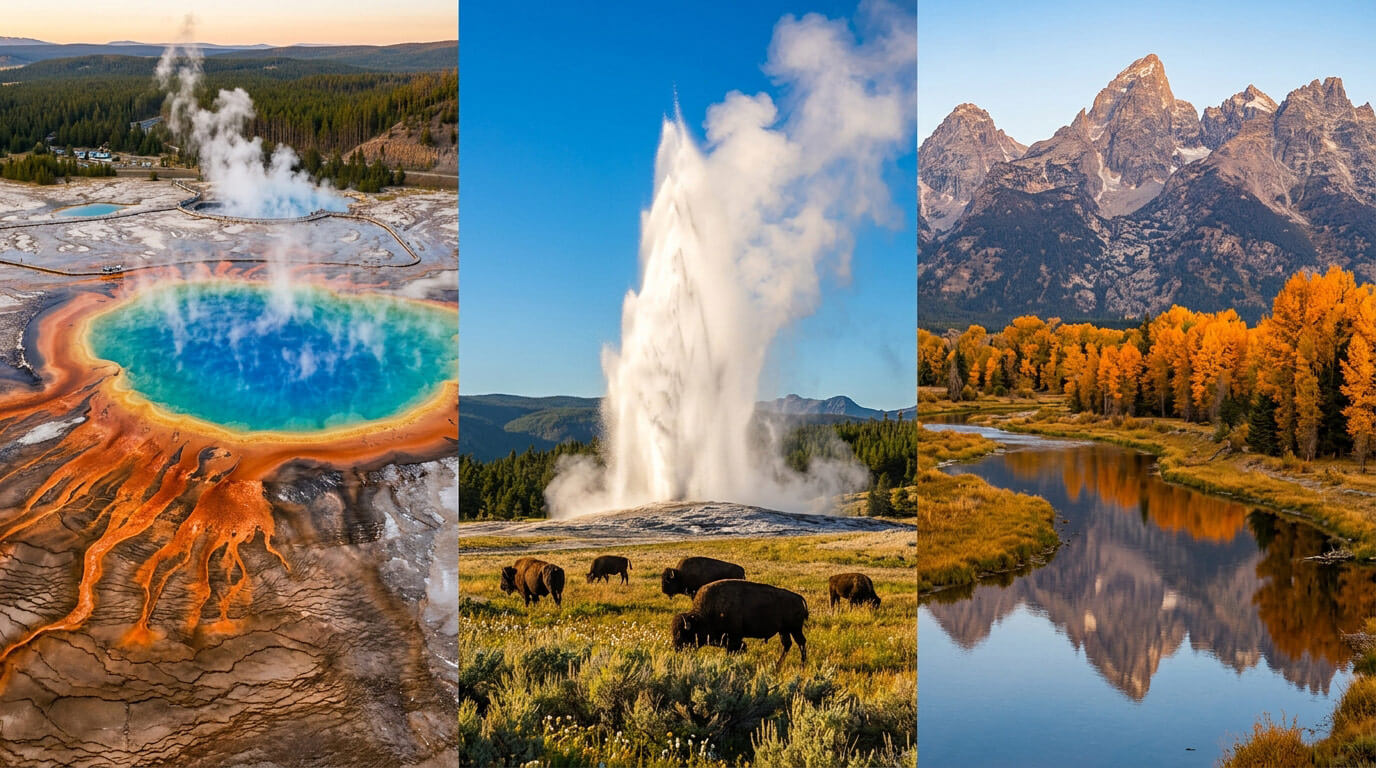
Wyoming is the least populous state in the country, with fewer than 600,000 residents spread across land more than twice the size of most East Coast states, and it packs an outsized share of the American West's most iconic scenery into that empty space. Yellowstone, the world's first national park, and Grand Teton, with its jagged peaks rising straight out of the valley floor, anchor the state's northwest corner, while Devils Tower stands alone on the plains as the country's first national monument. Jackson Hole gives the state its most polished resort town, but most of Wyoming remains genuine cattle and cowboy country, largely unchanged by the tourism built up around its two national parks.
Top Attractions, Tours and Tickets in Wyoming
Yellowstone National Park
Yellowstone, established in 1872, was the world's first national park and sits atop one of the largest active volcanic systems on the planet, responsible for more than half of the world's geysers, including Old Faithful, which has erupted roughly every 90 minutes for well over a century. Grand Prismatic Spring, the largest hot spring in the country, gets its rainbow coloring from heat-loving bacteria ringing its edges, and the Grand Canyon of the Yellowstone drops the Yellowstone River more than 300 feet over the Lower Falls. Lamar Valley and Hayden Valley offer some of the best wildlife viewing in the Lower 48, regularly turning up bison, elk, wolves, and grizzly bears from the roadside.
Book Yellowstone Full-Day Tour from JacksonGrand Teton National Park & Jackson Hole
Grand Teton National Park needs almost no buildup to reach its high point, since the Teton Range rises directly from the valley floor with no foothills in the way, giving the peaks one of the most dramatic mountain profiles in the country. Jackson, the valley's main town, has grown into one of the wealthiest and most polished resort towns in the Mountain West, but it still sits directly beside the National Elk Refuge, where thousands of elk winter each year within sight of downtown. Oxbow Bend, where the Snake River bends beneath Mount Moran, remains one of the most photographed spots in the entire national park system, especially at sunrise.
Book Grand Teton Guided Wildlife TourDevils Tower National Monument
Devils Tower, a sheer volcanic rock formation rising 867 feet from its base in Wyoming's northeastern corner, became the country's first national monument in 1906, designated by President Theodore Roosevelt under the newly passed Antiquities Act. Several Northern Plains tribes consider the formation sacred, and prayer cloths tied to trees around its base are a common and respectful sight along the 1.3-mile trail circling the tower. The formation gained mainstream pop culture fame as the climactic location in Steven Spielberg's Close Encounters of the Third Kind, and its distinctive vertical columns, among the tallest and most complete examples of columnar jointing in the world, also make it one of the premier crack-climbing destinations in the country.
Book Devils Tower National Monument Day TripCheyenne & Frontier Days
Cheyenne, Wyoming's capital and largest city, hosts Cheyenne Frontier Days every July, a ten-day rodeo and Western celebration billed as the "Daddy of 'em All" that has run continuously since 1897 and now draws hundreds of thousands of visitors. Outside of Frontier Days, the city's downtown still carries its railroad-boomtown roots, having grown up almost overnight in 1867 as the Union Pacific Railroad pushed westward through the territory. The Wyoming State Capitol, restored and reopened in 2019 after a major renovation, sits at the north end of downtown with a gold-leafed dome visible from much of the city.
Cody & Buffalo Bill Country
Cody was founded directly by Buffalo Bill Cody in 1896 as a gateway town to Yellowstone's east entrance, and the Buffalo Bill Center of the West, actually five museums under one roof, covers everything from Cody's own Wild West show career to Plains Indian culture and American firearms history. The Cody Nite Rodeo runs every single night through the summer, making it the longest-running nightly rodeo in the world, and the drive from Cody into Yellowstone through the Wapiti Valley was once called "the most scenic 52 miles in America" by Theodore Roosevelt himself. Heart Mountain, just outside town, was also the site of a World War II Japanese American incarceration camp, now preserved as an interpretive center covering a darker chapter of the region's history.
The Wind River Range & Wild West Heritage
The Wind River Range, running through central Wyoming, holds the state's highest peak, Gannett Peak, along with the largest concentration of glaciers in the Rocky Mountains outside Glacier National Park, despite receiving a fraction of the visitors of Yellowstone or Grand Teton. The Wind River Indian Reservation, home to the Eastern Shoshone and Northern Arapaho tribes, covers a substantial portion of west-central Wyoming and remains one of the largest reservations in the country by land area. Casper and the surrounding North Platte River corridor once funneled hundreds of thousands of 19th-century pioneers west along the Oregon, California, and Mormon Pioneer Trails, with wagon ruts still visible at sites like Register Cliff.
Wyoming's State Parks & Wide Open Spaces
Hot Springs State Park, in Thermopolis, centers on a free public bathhouse fed by mineral hot springs that flow at a constant 104 degrees, part of a spring system the Eastern Shoshone once considered sacred healing ground before ceding it to the state in 1896 on the condition that some access remain free forever. The Bighorn Mountains, rising sharply from the plains near Sheridan, offer some of the least-crowded high-country hiking and scenic driving in the state along the Bighorn Scenic Byway. With a population density of roughly six people per square mile, most of Wyoming outside its national parks remains genuinely open range, still defined more by cattle ranches than by tourism.
Major Cities and Places to Visit in Wyoming
- Cheyenne Tours & Tickets - Wyoming's state capital and largest city, home to Cheyenne Frontier Days, the world's largest outdoor rodeo and Western celebration.
- Jackson Tours & Tickets - A mountain resort town in Jackson Hole valley, the main gateway to both Grand Teton and Yellowstone National Parks.
- Cody Tours & Tickets - A town founded by Buffalo Bill Cody himself in 1896, now the eastern gateway to Yellowstone and home to the Buffalo Bill Center of the West.
- Casper Tours & Tickets - Wyoming's second-largest city, on the North Platte River, historically a hub for the Oregon, California, and Mormon Pioneer Trails.
- Laramie Tours & Tickets - A university town on the high plains of southeastern Wyoming, home to the University of Wyoming, the state's only four-year public university.
- Gillette Tours & Tickets - The self-declared "Energy Capital of the Nation," at the center of the coal-rich Powder River Basin in northeastern Wyoming.
- Sheridan Tours & Tickets - A ranching town at the base of the Bighorn Mountains, known for its Old West architecture and the historic Sheridan Inn.
- Sundance Tours & Tickets - A small town named for the Sundance Kid, near the base of Devils Tower National Monument in northeastern Wyoming.
Universities, Colleges and Sports Teams in Wyoming
- University of Wyoming in Laramie - The state's only four-year public university, based in Laramie, home of the Wyoming Cowboys.
Wyoming Demographics and Population
According to the 2024 American Community Survey, Wyoming has a population of approximately 582,397 people across 97,813 square miles, ranking it 50th among U.S. states by population. The median household income is $76,176, and the largest racial and ethnic groups are Asian (0.9%), White (81.4%), Hispanic Latino (10.5%), American Indian and Alaska Native (2.3%), and Black or African American (0.9%). The median age is 39.1 years, and the per capita income is $41,006. Approximately 10.5% of residents live below the poverty line, compared to the national rate of 12.4%. Wyoming has 239,000 households and a mean commute time of 18.8 minutes. Wyoming has no state income tax, and its economy is built heavily on coal, oil, and natural gas extraction in the Powder River Basin, alongside a tourism industry anchored almost entirely by Yellowstone and Grand Teton National Parks.
When to Visit Wyoming
Winter (December through February): Long, cold, and windy, with most interior roads through Yellowstone closed to regular vehicles, though Jackson Hole Mountain Resort keeps the Jackson area busy with skiing. Spring (March through May): A muddy transition season as Yellowstone's and Grand Teton's roads reopen gradually through May, with newborn wildlife emerging and noticeably thinner crowds. Summer (June through August) is the best time to visit Wyoming. Warm and the peak season for both national parks and Cheyenne Frontier Days in July, though also the busiest and most crowded stretch of the year. Fall (September through November): Cool and clear, with golden aspens across the mountains and the elk rut drawing wildlife watchers before most park facilities close for the season by October.
Frequently Asked Questions About Touring Wyoming
Official Wyoming Resources
The following official government websites provide additional planning resources, park information, and historical records for travelers visiting Wyoming.
| Resource | Description | Website |
|---|---|---|
| Travel Wyoming | The state's official travel and tourism site with attraction guides, events, and trip planning tools. | travelwyoming.com/ |
| Wyoming State Parks, Historic Sites & Trails | Official listing of Wyoming's state parks and historic sites, including Hot Springs State Park. | wyoparks.wyo.gov/ |
| Wyoming State Parks & Cultural Resources | State agency responsible for historic preservation, cultural resources, and archival research. | wyospcr.wyo.gov/ |
| Wyoming.gov | The official portal for Wyoming state government services and information. | wyoming.gov/ |